

Great Dane: Complete Guide to Temperament, Health, Care & History
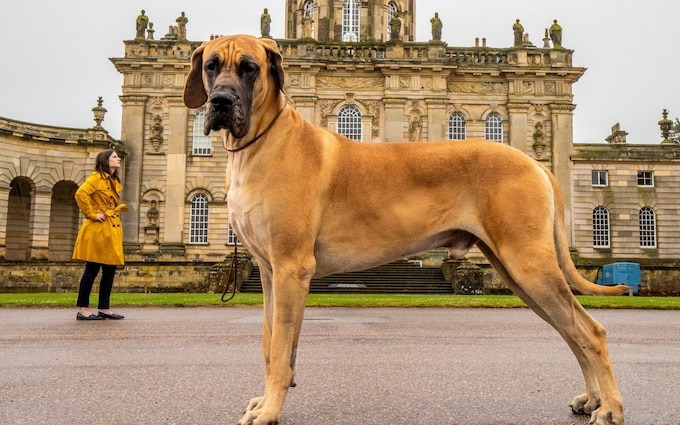
Towering over most dogs at over 30 inches tall, the Great Dane is the gentle giant of legends—the “Apollo of Dogs” for its majestic grace and noble bearing. Despite its imposing size (males can weigh 175+ pounds), this giant German breed is renowned for its sweet, affectionate, and people-oriented temperament, often leaning against its favorite humans like a 200-pound lapdog.
Originally bred to hunt wild boar in the forests of Germany, the Great Dane evolved from a fierce catch dog into a refined companion of nobility—and today, a beloved family guardian. With its sleek lines, expressive eyes, and elegant gait, it combines the power of a mastiff with the grace of a greyhound.
Yet behind its regal appearance lie serious realities: one of the shortest lifespans among purebreds, susceptibility to life-threatening bloat, and a deep need for human companionship. The Great Dane is not just a big dog—it’s a high-commitment, high-reward companion for those who understand its needs.
In this comprehensive, rigorously researched guide, you’ll learn everything about the Great Dane: its German origins, distinctive physical elegance, gentle temperament, critical health vulnerabilities, moderate grooming needs, and whether your lifestyle can support this noble giant. We’ll also compare it to similar giant breeds like the Irish Wolfhound, Mastiff, and Deerhound to clarify its unique place among the world’s largest dogs.
All information is verified through the American Kennel Club (AKC), Great Dane Club of America (GDCA), Orthopedic Foundation for Animals (OFA), and German kennel club records.
Origin & History
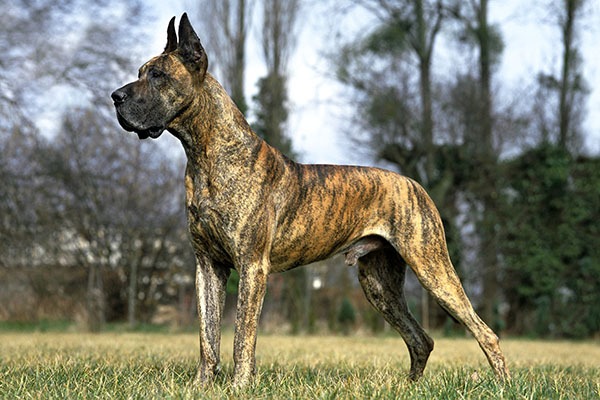
The Great Dane’s ancestors were boar-hunting dogs in 16th–18th century Germany—massive, brindle-coated hunters known as “Englische Dogge” (English Dog), despite being distinctly German. These early Danes were fierce, agile, and powerful, bred to corner and hold wild boar—a dangerous, high-stakes task.
By the 1800s, as boar hunting declined, the breed was refined for elegance, temperament, and companionship. German nobility prized them as estate guardians and status symbols. The name “Great Dane” is a historical misnomer—coined by a French naturalist who mistakenly believed the dogs originated in Denmark.
The German breed standard was established in 1880, and the AKC recognized the breed in 1887. Today, the Great Dane is celebrated for its calm, friendly nature—far removed from its boar-hunting roots.
Key distinction: Unlike the Irish Wolfhound (a sighthound built for chasing) or the English Mastiff (a massive, stationary guardian), the Great Dane is a balanced blend of speed, strength, and grace.
Physical Characteristics
The Great Dane is a giant, elegant, and smoothly muscled dog built for power and endurance—not bulk.
- Height:
- Males: 30–34 inches (76–86 cm)
- Females: 28–32 inches (71–81 cm)
- Note: The AKC disqualifies dogs under 30″/28″
- Weight:
- Males: 140–175+ lbs (64–79+ kg)
- Fem ales: 110–140 lbs (50–64 kg)
- Coat: Short, smooth, and glossy—lies flat against the body
- Colors (AKC-recognized):
- Brindle (golden base with black stripes)
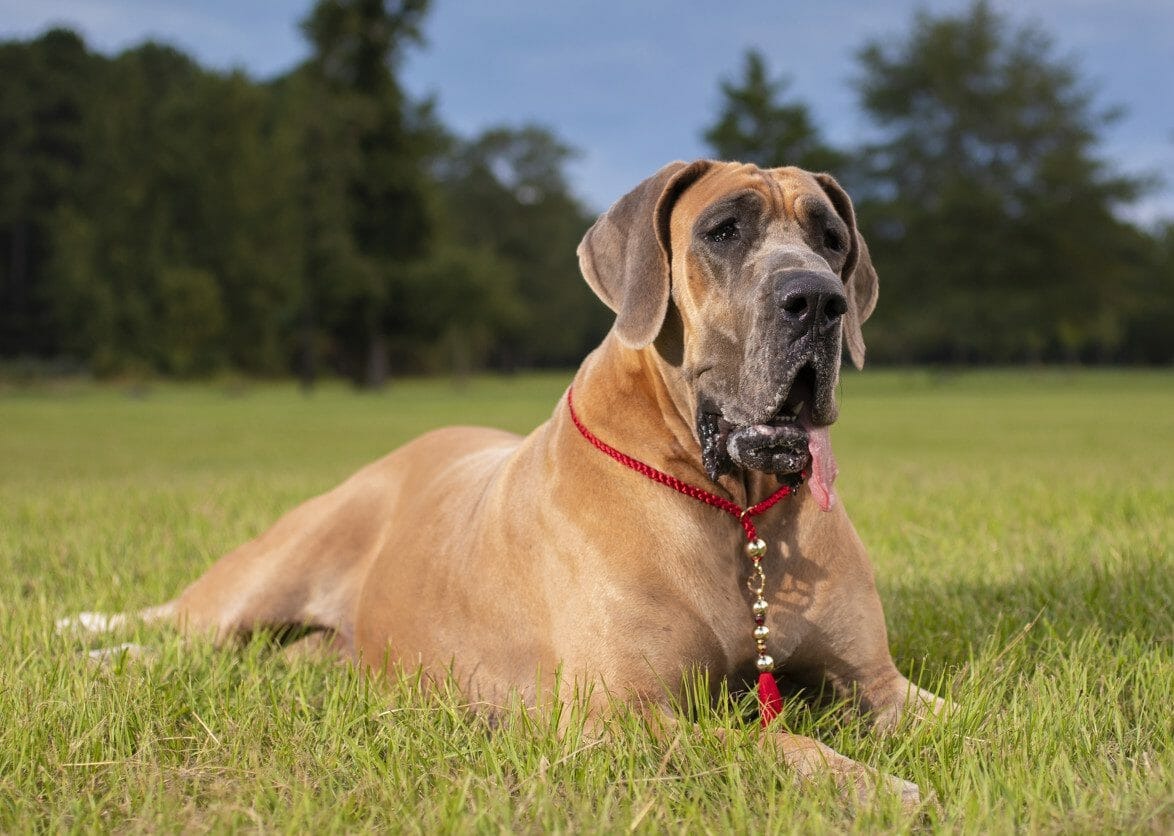
- Fawn (golden with black mask)
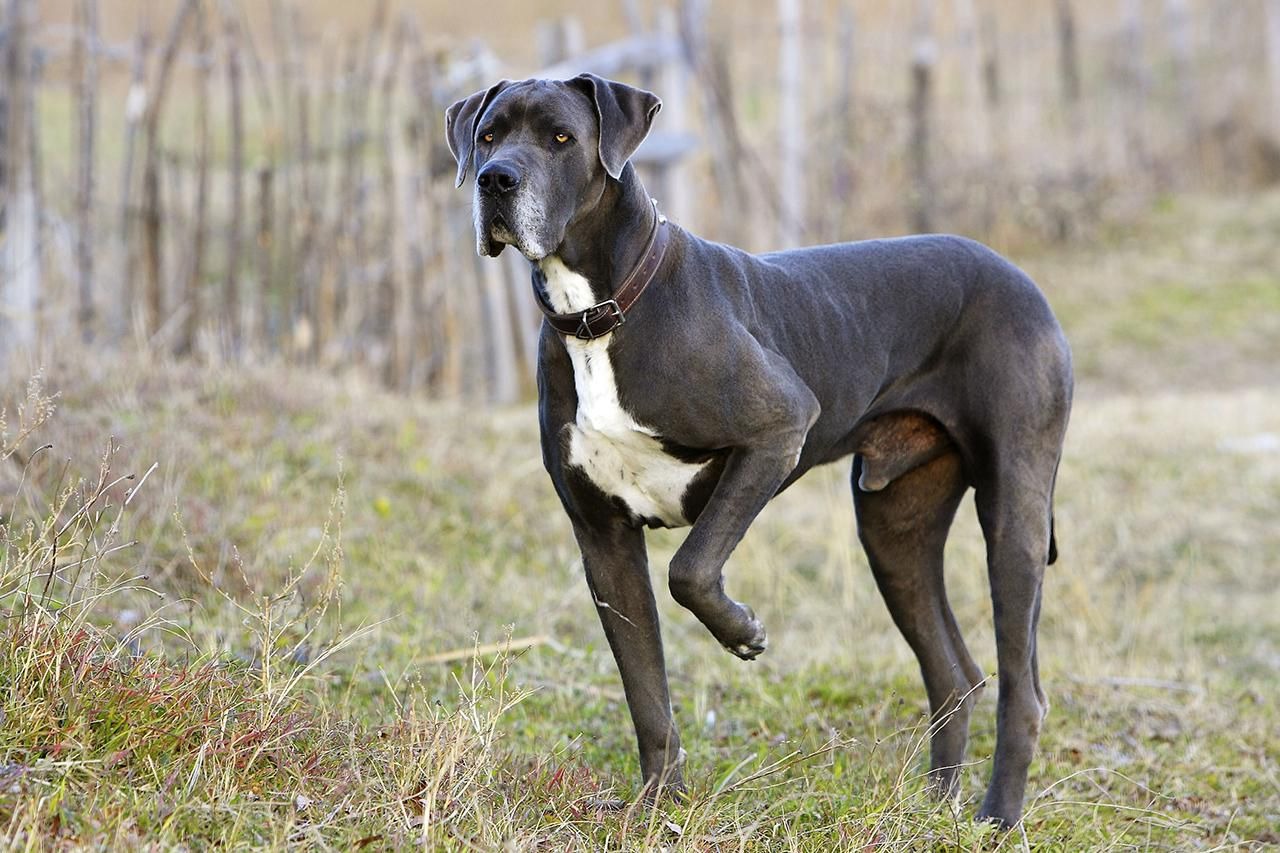
- Blue (steel gray)
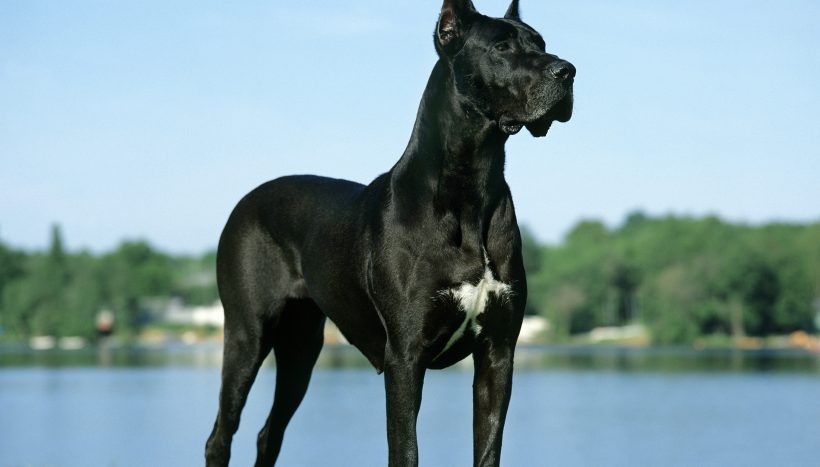
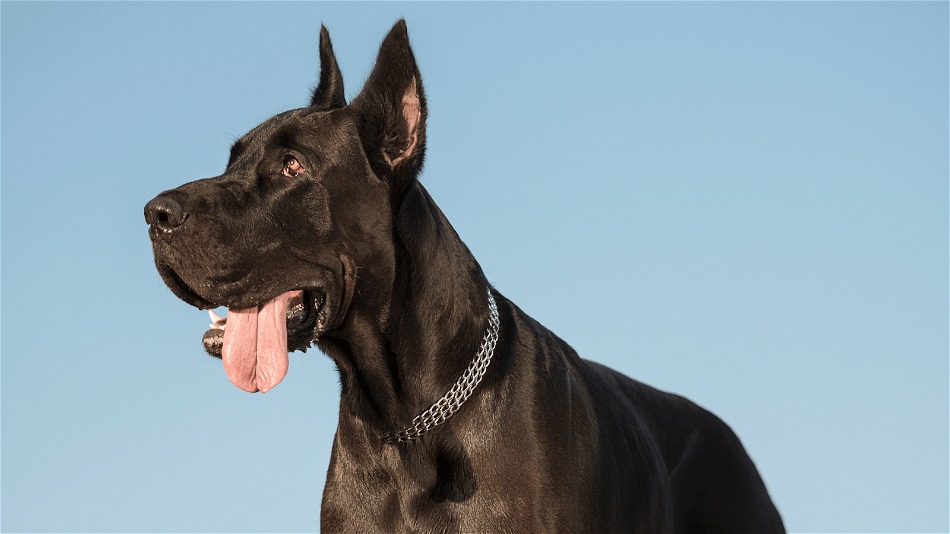
- Black
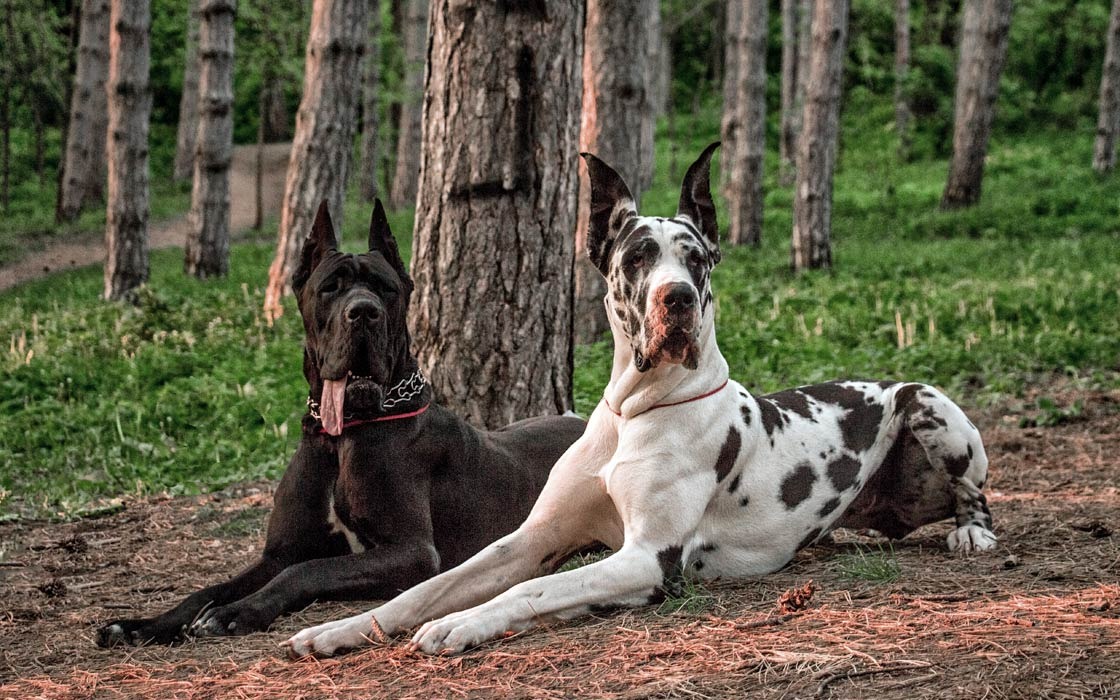
- Harlequin (white base with irregular black patches—unique to the breed)
- Mantle (black and white with solid black “saddle”)
- Note: “Merle” or “chocolate” are not standard and often linked to health defects
- Build: Long, level back; deep chest; tucked abdomen; graceful neck and head
- Head: Rectangular, with dark, intelligent eyes and natural ears (traditionally cropped in the U.S., but banned in many countries)
- Tail: Long, tapering, carried low—never curled
Its movement is smooth, powerful, and ground-covering—like a giant greyhound.
Comparison: More refined and agile than the Mastiff, and more people-oriented than the Irish Wolfhound.
Temperament & Personality
The Great Dane is affectionate, patient, and deeply bonded—often called the “heart on stilts.”
- Affection: Forms intense bonds; leans, follows, and seeks physical contact
- Gentleness: Exceptionally good with respectful children—earned the “gentle giant” title
- Trainability: Eager to please, responds well to positive reinforcement
- Sociability: Friendly with strangers when socialized; not a guard dog
- Energy level: Moderate—enjoys short bursts of play followed by naps
Myth debunked: Great Danes are not aggressive—they’re among the most trusting giant breeds. Poor breeding or lack of socialization—not the breed—causes issues.
Compared to the Mastiff (more protective), the Great Dane is more outgoing and less territorial; compared to the Irish Wolfhound, it’s more trainable and family-focused.
Care Requirements
Exercise
Needs 30–60 minutes of daily exercise:
- Brisk walks, gentle play, or short jogs (avoid hard surfaces in youth)
- Never over-exercise puppies—growth plates are vulnerable until 18–24 months
- Mental stimulation: obedience, trick training, or food puzzles
This is not a high-energy breed—it conserves energy like a true companion.
Grooming
- Low-shedding (short coat), but moderate maintenance due to size
- Brush 1–2 times weekly with a rubber curry or bristle brush
- Bathe every 6–8 weeks—use moisturizing shampoo to prevent dry skin
- Clean ears weekly; trim nails regularly (dewclaws often present)
Tip: Keep a lint roller handy—white hairs show on dark clothes!
Diet
High-quality, large-breed puppy formula until 18 months to prevent rapid growth. Adult diet should be moderate-protein with joint support. Use slow-feeder bowls to prevent bloat.
Environment
Adaptable to suburban or rural homes with secure fencing. Requires indoor access—this is a house dog, not a yard dog. Tolerates cool weather; provide shade in heat.
Health & Lifespan
Average lifespan: 7–10 years (AKC, GDCA)—one of the shortest among purebreds, largely due to size-related stress.
Condition | Description | Prevalence | Symptoms / Notes |
|---|---|---|---|
Gastric Dilation-Volvulus (Bloat) | Twisted stomach | Extremely high risk | Retching without vomiting—#1 cause of death; prophylactic gastropexy recommended |
Dilated Cardiomyopathy (DCM) | Enlarged, weak heart | High risk | Lethargy, coughing, collapse; annual cardiac screening essential |
Hip Dysplasia | Malformed hip joint | Moderate risk (OFA: ~20% affected) | Lameness; screen breeding stock |
Wobbler Syndrome | Spinal cord compression | Breed-specific | Unsteady gait, neck pain; requires MRI and surgery |
Hypothyroidism | Underactive thyroid | Moderate | Weight gain, skin issues; manageable |
Osteosarcoma | Bone cancer | Elevated vs. average | Lameness in older dogs; aggressive and often fatal |
GDCA strongly recommends gastropexy at time of spay/neuter and annual cardiac (echo) exams.
Responsible breeders test for DCM, hips, and thyroid—never buy from those who skip screening.

Training & Socialization
The Great Dane is highly trainable but slow to mature (mental maturity at 2–3 years).
- Start socialization before 14 weeks: expose to people, surfaces, sounds
- Use positive reinforcement with high-value rewards (chicken, cheese)
- Focus on leash manners, “place,” and calm behavior (size demands control)
- Never use punishment—this sensitive giant shuts down or becomes anxious
Warning: An untrained Great Dane is dangerous due to size—not aggression, but accidental knocking over of children or elderly.
Compared to the Irish Wolfhound, the Great Dane is more biddable and less aloof.
Suitability: Ideal Owner Profile
The Great Dane thrives with:
- Families with older children or calm households
- First-time giant-breed owners (more trainable than most giants)
- Owners who want a gentle, affectionate companion
- People prepared for bloat prevention, vet costs, and short lifespan
Not recommended for:
- Hot, humid climates without AC
- Small apartments (despite calm nature, they need space to lie down!)
- Homes seeking a long-lived or low-cost pet
- Anyone unprepared for giant-breed emergencies
Perfect for: Families, singles, or seniors wanting a loving, majestic companion with a heart as big as its frame.
Costs & Commitment
- Adoption: Common via Great Dane rescues ($300–$800)
- Reputable breeder: $1,800–$3,000 (health-tested, GDCA-affiliated)
- Monthly expenses: $120–$200 (large-dog food, joint/heart supplements)
- Special costs: Gastropexy ($1,500–$3,000), orthopedic beds, cardiac screening
Lifetime cost estimate: $25,000–$35,000 over 8 years—high due to short lifespan and emergency risks
Ethical Adoption vs. Breeder Guidance
Adoption is highly encouraged—many Danes end up in rescues due to size or cost.
If buying from a breeder:
- Demand OFA hip, cardiac (echo), and thyroid clearances
- Ask about gastropexy policy
- Meet both parents (assess temperament)
- Choose breeders affiliated with the Great Dane Club of America (GDCA)
Avoid breeders selling “rare colors” (merle, chocolate) or those without health testing—these often carry genetic defects.

FAQs
1. Is the Great Dane a giant dog?
Yes—the Great Dane is a giant breed, typically 28–34 inches tall and 110–175+ lbs.
2. Are Great Danes good with kids?
Yes—with supervision. Their size can accidentally knock over toddlers, but they’re incredibly gentle.
3. Do Great Danes shed a lot?
Minimally—short coat sheds lightly year-round.
4. Great Dane vs. Mastiff: what’s the difference?
Great Dane is more elegant, faster, and less drooly; Mastiff is more massive, protective, and sedentary.
5. How long do Great Danes live?
Only 7–10 years—one of the shortest lifespans among purebreds.
6. Are Great Danes aggressive?
No—they’re among the friendliest giant breeds, though protective of family.
7. Can Great Danes live in apartments?
Yes—if exercised properly. They’re calm indoors but need space to stretch out.
8. What’s the #1 health risk for Great Danes?
Bloat (GDV)—preventable with gastropexy and proper feeding.
Final Verdict: Is the Great Dane Right for You?
Yes, if…
- You want a giant, affectionate, elegant companion with a gentle soul
- You can provide bloat prevention, vet care, and indoor companionship
- You value loyalty, grace, and quiet devotion
- You’re prepared for a short but deeply rewarding life
No, if…
- You seek a long-lived or low-cost pet
- You live in extreme heat without AC
- You can’t handle giant-breed emergencies or size-related logistics
- You dislike the idea of losing a beloved dog too soon
The Great Dane isn’t just a dog—it’s a gentle titan, offering boundless love and regal presence to those who open their hearts and homes.