

Toyger: Complete Guide to Temperament, Health, Care & History
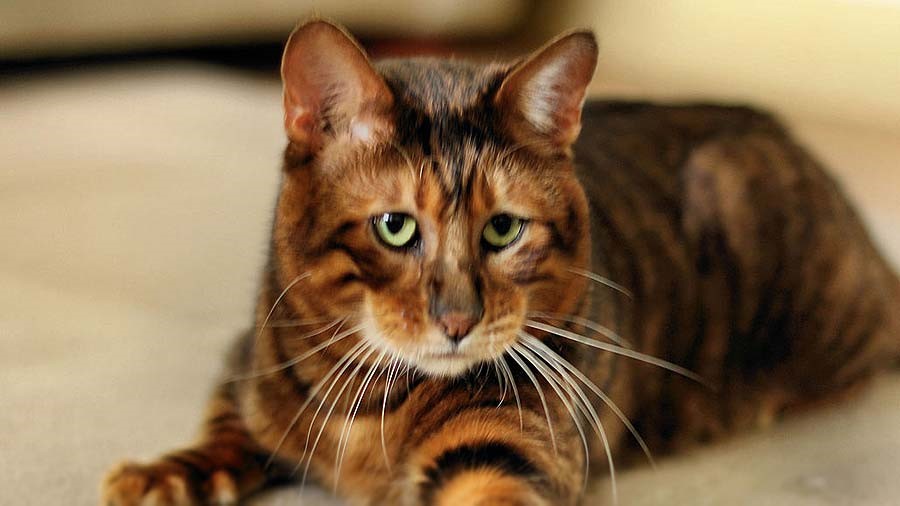
With dramatic black stripes on a bright orange coat, glittered fur that shimmers in sunlight, and a calm, affectionate nature, the Toyger is the only domestic cat deliberately bred to mimic the look of a wild tiger—without the wild temperament. Created in the 1980s by American breeder Judy Sugden, the Toyger combines exotic appearance with gentle, people-oriented behavior, making it a striking yet manageable companion.
Unlike wild-looking hybrids like the Bengal (which has Asian leopard cat ancestry), the Toyger is 100% domestic, developed from striped domestic shorthairs and Bengals to enhance its tiger-like markings while preserving a sweet, adaptable personality. It’s playful but not hyperactive, intelligent but not demanding, and social without being clingy.
Often described as “a tiger in your living room,” the Toyger is more than a novelty—it’s a testament to how selective breeding can create beauty without sacrificing temperament.
In this comprehensive, expert-vetted guide, you’ll learn everything about the Toyger: its modern American origins, distinctive striped pattern, friendly temperament, common health considerations, grooming needs, and whether your household is ready for this charismatic, low-maintenance companion. We’ll also compare it to similar breeds like the Bengal, Egyptian Mau, and Abyssinian to clarify its unique identity.
All information is verified through The International Cat Association (TICA), Toyger Cat Society, and veterinary research.
Origin & History
The Toyger was created in the mid-1980s by Judy Sugden, a California-based cat breeder who noticed that one of her domestic shorthairs had circular tabby markings on its temples—reminiscent of a tiger’s. Inspired, she set out to develop a cat that looked like a miniature tiger but had the temperament of a loving house cat.
Her foundation cats included:
- Mojave, a striped domestic shorthair with unique markings
- Scrapmetal, a brown mackerel tabby
- Later, Bengals were introduced to enhance contrast and glitter
After decades of selective breeding, the Toyger was accepted into TICA’s New Breed class in 2000 and achieved Championship status in 2007. Today, it remains a rare but growing breed, celebrated for its bold pattern, muscular build, and friendly nature.
Key fact: The name “Toyger” is a portmanteau of “toy” + “tiger”—emphasizing its role as a safe, domestic homage to the wild tiger.
Physical Characteristics
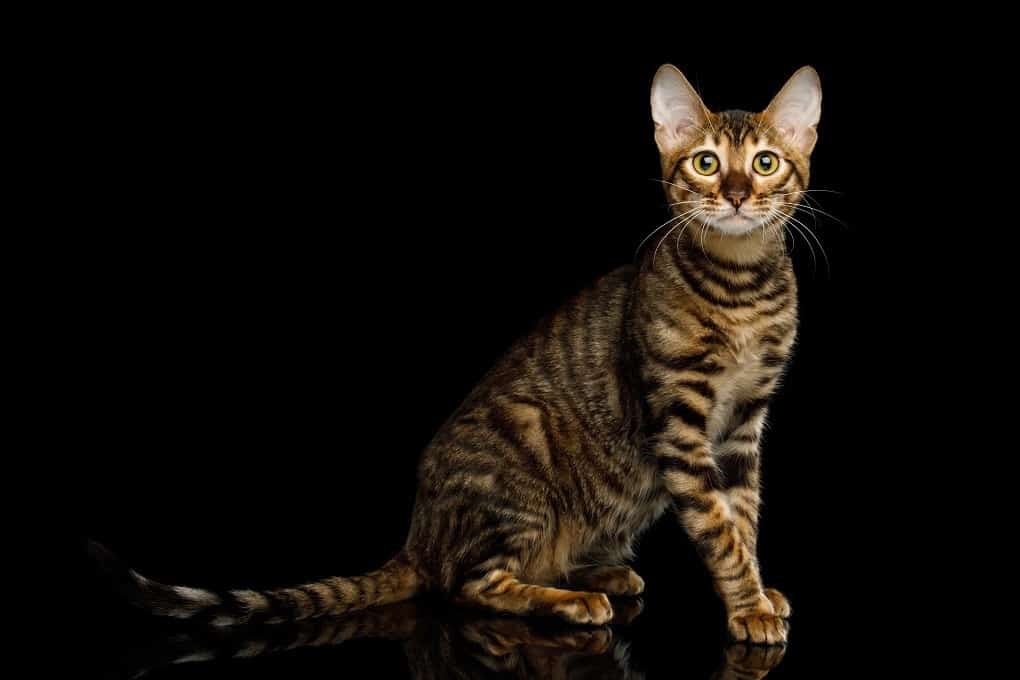
The Toyger is a medium-sized, muscular, and athletic cat built for grace and presence.
- Weight:
- Males: 10–15 lbs (4.5–6.8 kg)
- Females: 7–10 lbs (3.2–4.5 kg)
- Body: Long, tubular, and heavily muscled—more substantial than most domestic shorthairs
- Head: Blunt, rounded muzzle with small, rounded ears; eyes set wide apart
- Eyes: Medium-large, circular, and deep-set—color ranges from green to gold
- Coat: Short, soft, and uniquely “glittered”—each hair tipped with a reflective sheen
- Pattern:
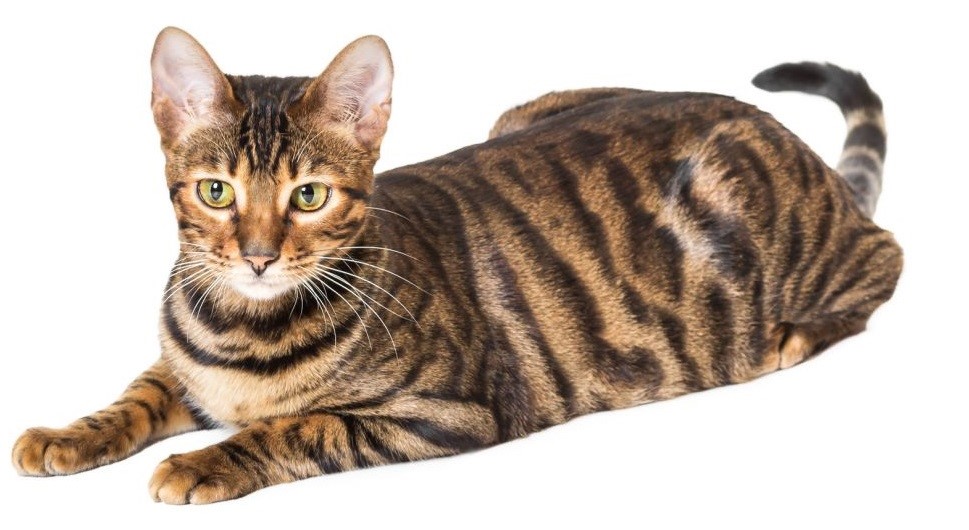
- Bold, vertical, branched black stripes on a bright orange or tan background
- Stripes should be unbroken, asymmetrical, and wrap around the body
- White markings are minimal or absent (excessive white is a fault)
- Circular temple markings (“thumbprint”) are highly prized
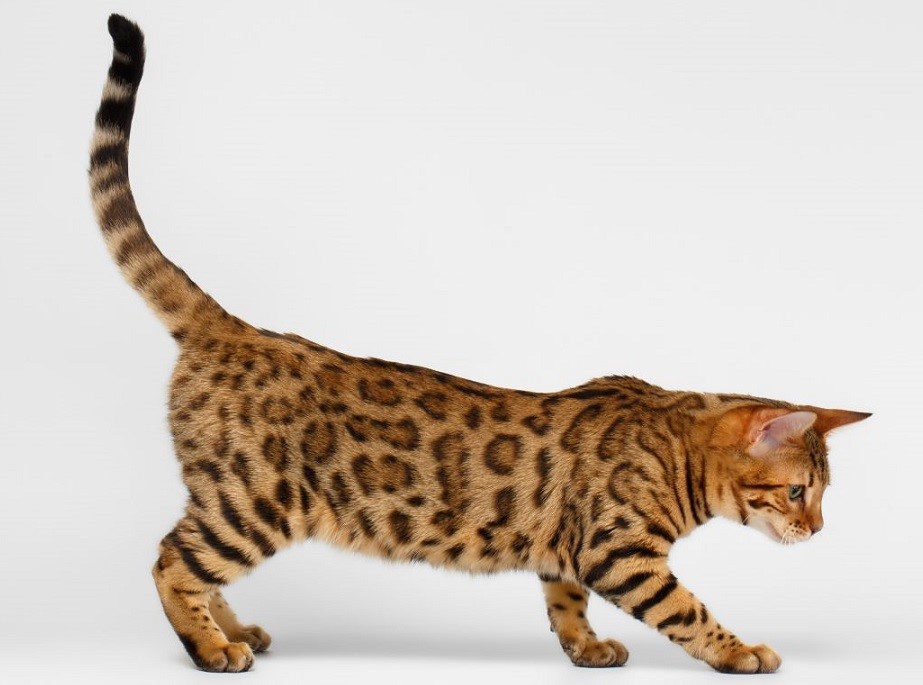
Comparison: More tiger-like and muscular than the Bengal, and less spotted than the Egyptian Mau.
Temperament & Personality
The Toyger is friendly, calm, and highly adaptable—a true people cat with exotic looks.
- Affection: Enjoys human company but isn’t clingy; often follows owners room to room
- Playfulness: Moderate energy—enjoys interactive toys, climbing, and puzzle feeders
- Intelligence: Learns tricks easily; responds well to clicker training
- Sociability: Gets along well with children, other cats, and cat-friendly dogs
- Vocalization: Quiet and soft-voiced—rarely meows excessively
Myth debunked: Despite its wild appearance, the Toyger is not high-energy or destructive—it’s one of the most laid-back designer breeds.
Compared to the Bengal, the Toyger is calmer and less demanding; compared to the Abyssinian, it’s more relaxed and less hyperactive.
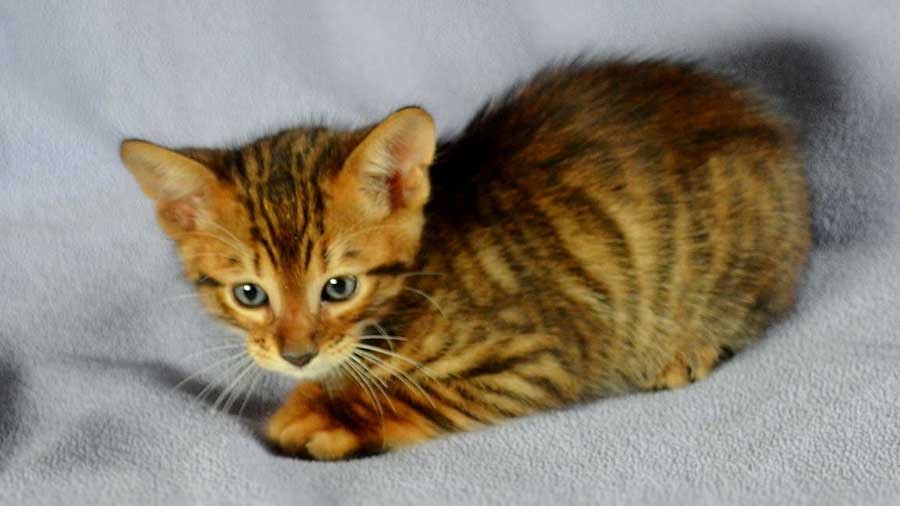
Care Requirements
Exercise & Enrichment
Needs moderate daily play (15–20 minutes):
- Wand toys, feather teasers, or laser pointers (always end with a physical toy)
- Cat trees and window perches for climbing and sunbathing
- Leash training is often successful—many enjoy supervised outdoor walks
Without stimulation, may become bored, but rarely destructive.
Grooming
- Very low maintenance: Weekly brushing suffices (removes loose hair, enhances glitter)
- Occasional nail trims and ear checks
- Dental care recommended (prone to gingivitis like many short-haired cats)
Note: The short coat sheds minimally—ideal for light shedders.
Diet
High-quality, moderate-protein diet with taurine for eye and heart health. Avoid fish-heavy diets (linked to thyroid issues). Monitor weight—muscular build can hide fat.
Environment
Adaptable to apartments or houses, as long as companionship needs are met. Thrives in multi-pet households and enjoys gentle interaction.
Health & Lifespan
Average lifespan: 12–15 years (TICA, breeder surveys)—typical for healthy domestic breeds.
Condition | Description | Prevalence | Symptoms / Notes |
|---|---|---|---|
Hypertrophic Cardiomyopathy (HCM) | Thickened heart muscle | Low risk (screened in ethical lines) | Lethargy, breathing difficulty; annual cardiac screening recommended |
Gingivitis / Periodontal Disease | Gum inflammation | Common | Bad breath, drooling; prevent with dental care |
Food Sensitivities | Reactions to fillers or dyes | Occasional | GI upset, skin issues; resolve with limited-ingredient diet |
Reputable breeders screen for HCM—ask for cardiac clearances.
No major breed-specific genetic disorders have been documented in modern lines.
Training & Socialization
Toygers are highly trainable due to their intelligence and desire to engage.
- Start socialization early (3–14 weeks): expose to people, sounds, carriers, and handling
- Use clicker training for tricks, recall, or leash walking
- Provide consistent routines—they thrive on predictability
- Introduce other pets slowly; most get along well
They respond poorly to punishment—positive reinforcement only.
Suitability: Ideal Owner Profile
The Toyger thrives with:
- Families, singles, or seniors who want an attractive, low-drama companion
- First-time cat owners (more forgiving than Bengals)
- Homes with other pets or frequent human presence
- Owners who enjoy beauty, play, and gentle interaction
Not recommended for:
- People seeking a hyperactive or highly vocal cat
- Those who dislike moderate shedding (though it’s light)
- Anyone expecting a “wild” temperament—this is a true domestic cat
Perfect for: Active households wanting a stunning, friendly, low-maintenance cat with conversation-starting looks.
Costs & Commitment
- Adoption: Rare; few rescues specialize in Toygers ($300–$600 if available)
- Reputable breeder: $1,000–$2,000 (TICA registered, health-tested)
- Monthly expenses: $40–$70 (food, litter, preventatives)
- Special costs: Cat trees, interactive toys, dental care
Lifetime cost estimate: $8,000–$12,000 over 13 years
Ethical Adoption vs. Breeder Guidance
Due to its popularity, ethical breeding is important. Choose breeders who:
- Perform HCM cardiac screening
- Raise kittens in-home with early socialization
- Are members of the Toyger Cat Society or TICA-affiliated catteries
- Offer health guarantees and lifelong support
Avoid breeders selling “rare color” kittens without health screening.
FAQs
1. Is the Toyger a medium cat?
Yes—the Toyger is a medium-sized breed, typically 7–15 lbs with a muscular, athletic build.
Yes—the Toyger is a medium-sized breed, typically 7–15 lbs with a muscular, athletic build.
2. Are Toygers good with kids?
Yes—they’re playful, patient, and social with respectful children.
Yes—they’re playful, patient, and social with respectful children.
3. Do Toygers talk a lot?
No—they’re quiet and soft-voiced, rarely meowing excessively.
No—they’re quiet and soft-voiced, rarely meowing excessively.
4. Toyger vs. Bengal: what’s the difference?
Toyger is calmer, more muscular, and striped; Bengal is more energetic, spotted, and hybrid-derived.
Toyger is calmer, more muscular, and striped; Bengal is more energetic, spotted, and hybrid-derived.
5. Are Toygers hypoallergenic?
No—but their short, fine coat sheds minimally, which may help some allergy sufferers.
No—but their short, fine coat sheds minimally, which may help some allergy sufferers.
6. How rare is the Toyger?
Uncommon—fewer than 500 TICA registrations annually worldwide.
Uncommon—fewer than 500 TICA registrations annually worldwide.
7. Can Toygers be left alone?
Yes—they’re independent but social, and do well with another pet if you’re away often.
Yes—they’re independent but social, and do well with another pet if you’re away often.
8. What makes the Toyger’s coat “glittered”?
Each hair is tipped with a reflective sheen, causing it to sparkle in sunlight—a hallmark of the breed.
Each hair is tipped with a reflective sheen, causing it to sparkle in sunlight—a hallmark of the breed.
Final Verdict: Is the Toyger Right for You?
Yes, if…
- You want a medium, striking, friendly companion with tiger-like looks
- You enjoy daily play and gentle interaction
- You’re a first-time or experienced owner seeking a balanced, social cat
- You can provide companionship and mental stimulation
No, if…
- You prefer a hyperactive or highly vocal cat
- You dislike any shedding (though it’s minimal)
- You expect a “wild” temperament—this is a true domestic cat
- You want a purely decorative or aloof pet
The Toyger isn’t just a cat—it’s a living work of art, offering beauty, loyalty, and quiet charm to those who welcome its radiant spirit.