
Tonkinese: Complete Guide to Temperament, Health, Care & History
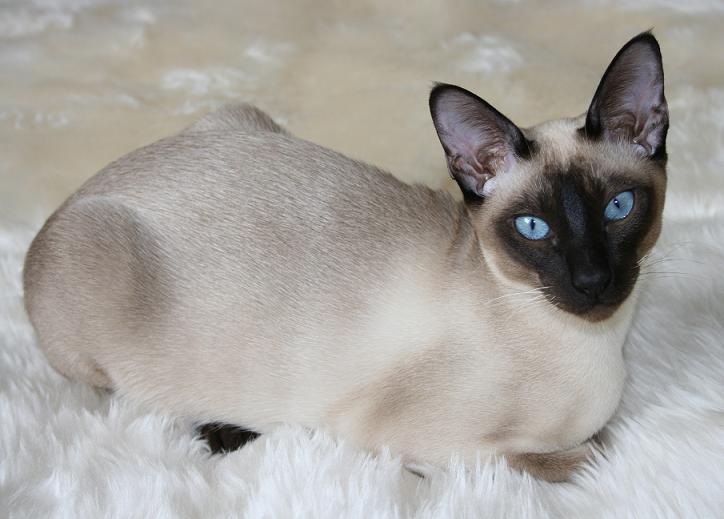
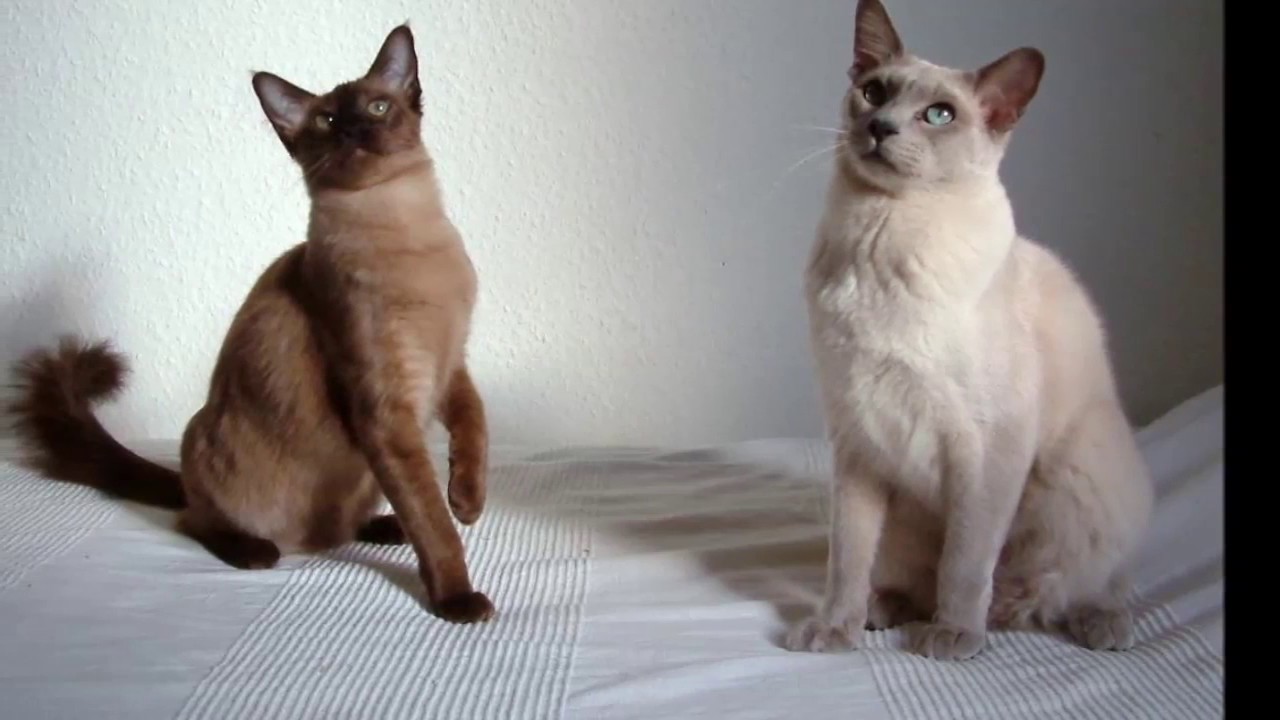
With sapphire-blue or aqua eyes, a sleek muscular body, and a voice that’s all charm (never shrill), the Tonkinese is the joyful “best of both worlds” cat—born from the union of the Siamese and Burmese. More than just a hybrid, the Tonkinese is a fully recognized, standardized breed known for its affectionate nature, playful antics, and striking coat patterns.
Unlike the demanding vocalness of the Siamese or the quiet reserve of the Burmese, the Tonkinese strikes a perfect balance: social but not clingy, talkative but melodious, intelligent but easygoing. It’s a cat that greets you at the door, plays fetch like a dog, and curls up on your lap the moment you sit down.
Often described as “clowns with velvet paws,” Tonkinese cats thrive on interaction, forming deep bonds with their humans and often following them room to room like feather-light shadows. They’re not aloof observers—they’re active participants in family life.
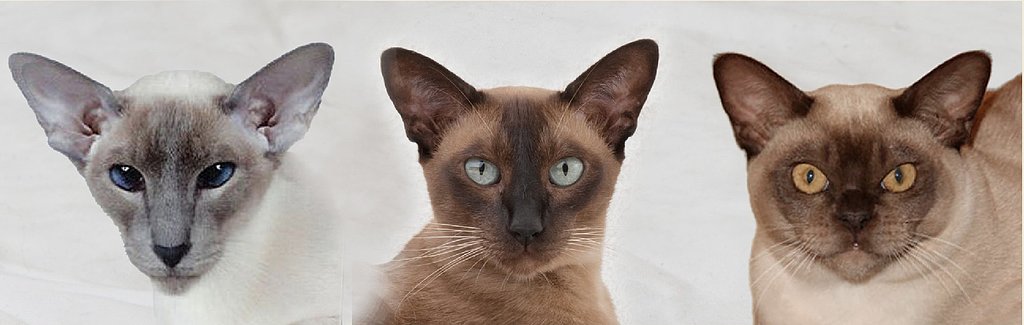
In this comprehensive, expert-vetted guide, you’ll learn everything about the Tonkinese: its 20th-century origins, distinctive mink coat pattern, engaging temperament, common health considerations, grooming needs, and whether your household is ready for this lively, loving companion. We’ll also compare it to parent breeds like the Siamese and Burmese, as well as similar social cats like the Oriental Shorthair and Balinese.
All information is verified through the Cat Fanciers’ Association (CFA), The International Cat Association (TICA), veterinary research, and Tonkinese breed clubs.
Origin & History
Though its ancestors date back centuries (the Siamese to 14th-century Siam, the Burmese to ancient Burma), the Tonkinese as a distinct breed emerged in the mid-20th century.
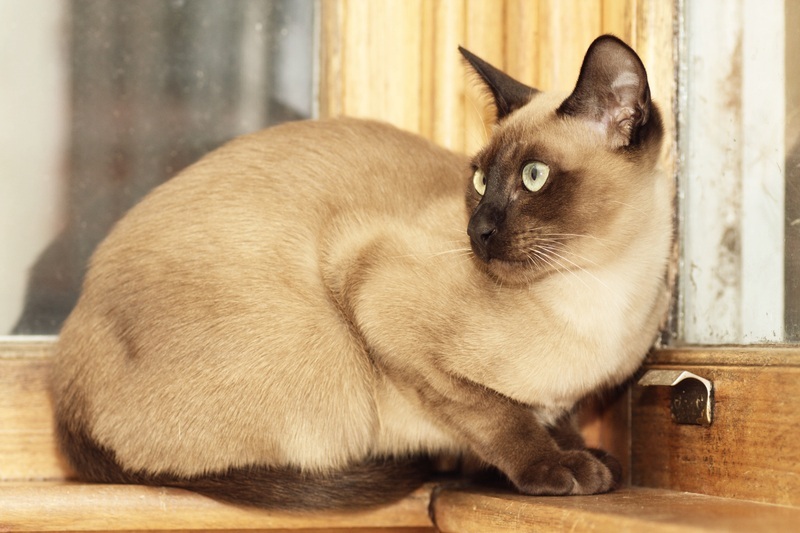
Early crosses between Siamese and Burmese were called “Golden Siamese” or “Champagne Siamese,” but they weren’t standardized. In the 1950s–60s, Canadian breeder Margaret Conroy began a formal breeding program to stabilize the look and temperament, naming the new breed “Tonkinese” after the Gulf of Tonkin near Burma and Thailand—a nod to its Southeast Asian roots.
The CFA granted championship status in 1984, and today the Tonkinese is celebrated as a unique breed in its own right, not just a mix.
Key fact: The Tonkinese is not a “designer hybrid”—it’s a purebred cat with its own standard, registry, and show class.
Physical Characteristics
The Tonkinese is a medium-sized, muscular, and agile cat built for play and grace.
- Weight:
- Males: 8–12 lbs (3.6–5.4 kg)
- Females: 6–8 lbs (2.7–3.6 kg)
- Body: Semi-foreign type—more substantial than Siamese, more svelte than Burmese; surprisingly heavy for its size
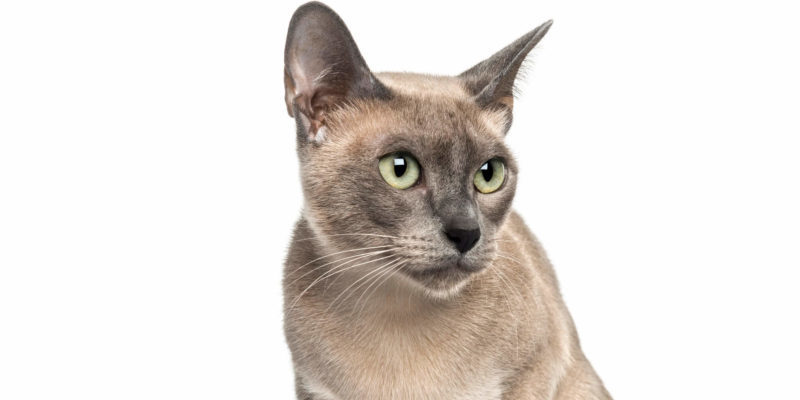
- Head: Wedge-shaped with rounded contours, almond-shaped eyes, and medium ears (less pointed than Siamese)
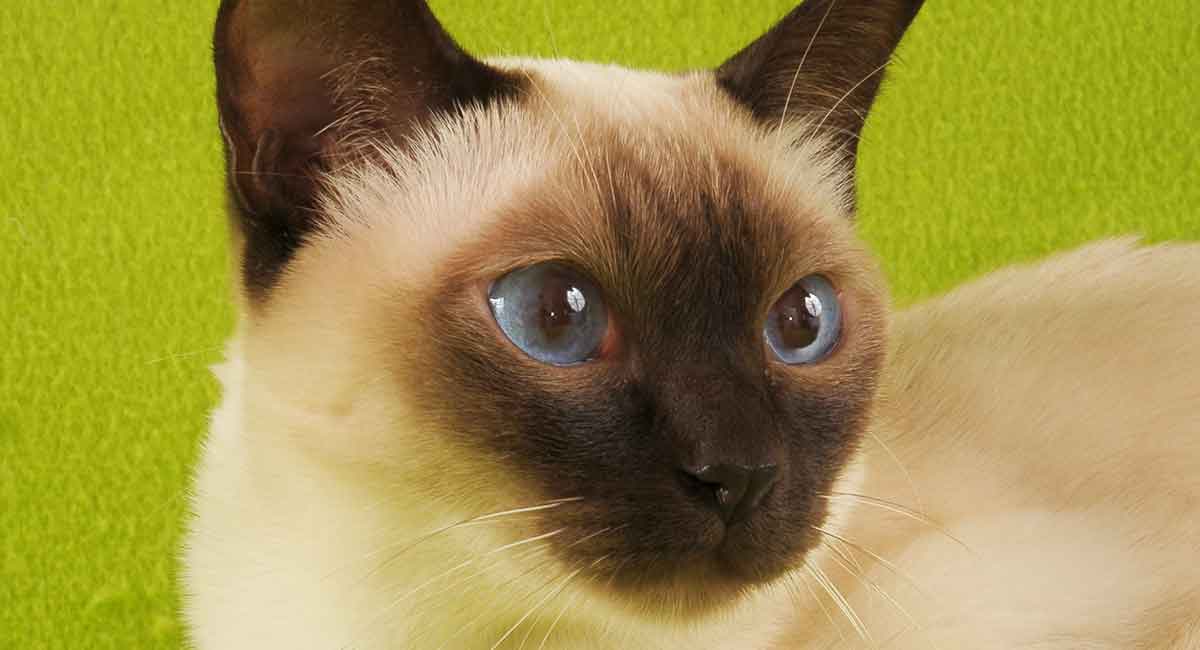
- Eyes: Aqua (blue-green) in mink-patterned cats; true blue in pointed; green-gold in solid—never yellow or copper
- Coat: Short, fine, and silky—lies close to the body with no undercoat
- Patterns & Colors (three distinct types):
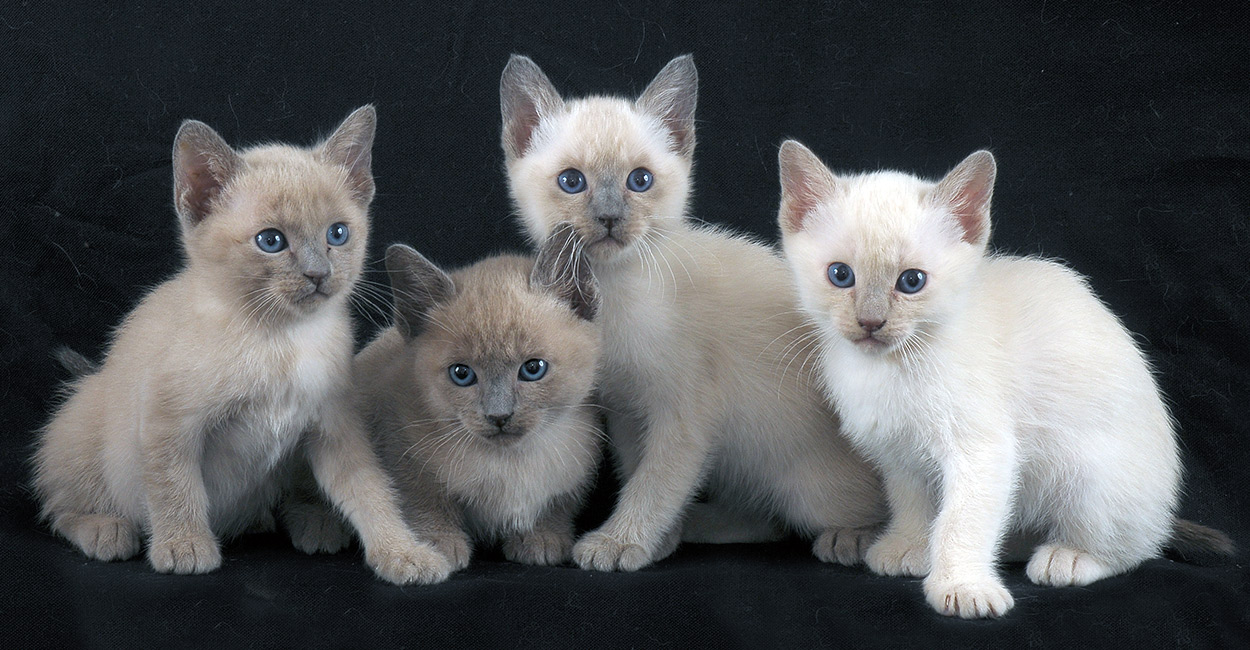
- Pointed (like Siamese): Dark face, ears, legs, tail; pale body
- Solid (like Burmese): Uniform color with subtle shading
- Mink (unique to Tonkinese): Medium contrast—darker points than solid, lighter than pointed; always paired with aqua eyes
Accepted colors: Natural (brown), Champagne (light tan), Blue, Platinum (pale gray with silver undertones)
Comparison: More robust and less angular than the Siamese, and more vocal and social than the Burmese.
Temperament & Personality
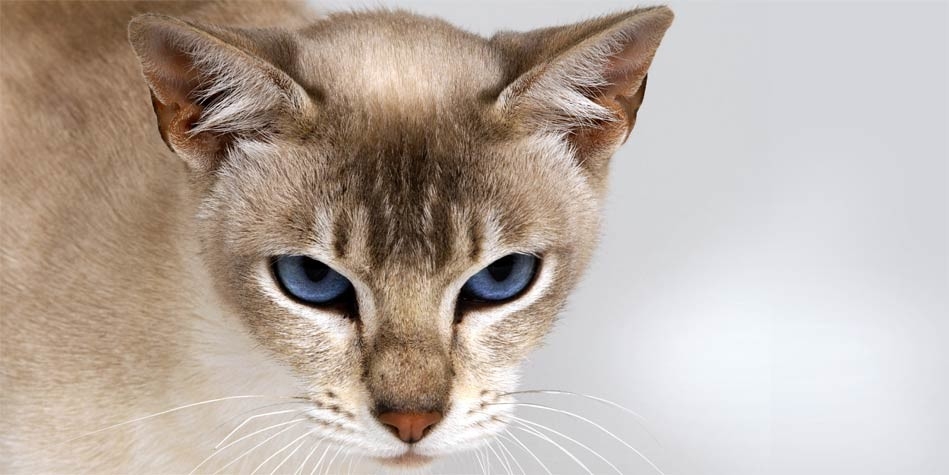
The Tonkinese is playful, affectionate, and deeply people-oriented—often called the “dog of the cat world.”
- Affection: Forms intense bonds; loves lap time, cuddles, and physical contact
- Playfulness: Retains kitten-like energy into adulthood; enjoys fetch, puzzle toys, and interactive games
- Vocalization: Talkative but musical—uses soft chirps, trills, and conversational meows (never the Siamese’s loud yowl)
- Intelligence: Highly trainable—learns tricks, walks on a leash, and responds to name calls
- Social Needs: Hates being alone; thrives with human or feline companionship
- Adaptability: Adjusts well to new environments if bonded to their person
Myth debunked: Tonkinese are not “noisy”—they’re communicative, using a gentle voice to engage, not demand.
Compared to the Oriental Shorthair (more high-strung), the Tonkinese is calmer and more grounded; compared to the Ragdoll, it’s more active and less passive.
Care Requirements
Exercise & Enrichment
Needs daily interactive play (15–30 minutes):
- Wand toys, laser pointers (always end with a physical toy), ball tracks
- Cat trees, shelves, and window perches for climbing
- Leash training is often successful—many enjoy supervised outdoor walks
Without engagement, may develop boredom behaviors (excessive vocalizing, attention-seeking).
Grooming
- Very low maintenance: Weekly brushing suffices (removes loose hair, enhances shine)
- Occasional nail trims and ear checks
- Dental care recommended (prone to gingivitis like many short-haired cats)
Note: The short coat sheds minimally—ideal for light shedders.
Diet
High-quality, moderate-protein diet with taurine for eye and heart health. Avoid fish-heavy diets (linked to thyroid issues). Monitor weight—muscular build can hide fat.
Environment
Adaptable to apartments or houses, as long as companionship needs are met. Not suited for long periods alone—consider a second cat if you’re away often.
Health & Lifespan
Average lifespan: 12–16 years (CFA, TICA)—longer than many purebreds due to hybrid vigor.
Condition | Description | Prevalence | Symptoms / Notes |
|---|---|---|---|
Gingivitis / Periodontal Disease | Gum inflammation | Common (as in Siamese/Burmese lines) | Bad breath, drooling; prevent with dental chews or brushing |
Crossed Eyes or Strabismus | Misaligned eyes | Rare (mostly historical) | Cosmetic only; not painful |
Progressive Retinal Atrophy (PRA) | Degenerative eye disease | Very rare (screened out in ethical lines) | Night blindness; genetic test available |
Amyloidosis | Protein buildup in organs | Low risk (inherited from Burmese lines) | Lethargy, weight loss; manageable if caught early |
Food Sensitivities | Reactions to fillers or dyes | Occasional | GI upset, skin issues; resolve with limited-ingredient diet |
Reputable breeders test for PRA and amyloidosis—ask for health clearances.
No major breed-specific heart or kidney issues have been documented in modern lines.
Training & Socialization
Tonkinese are highly trainable due to their intelligence and desire to engage.
- Start socialization early (3–14 weeks): expose to people, sounds, carriers, and handling
- Use clicker training for tricks, recall, or leash walking
- Provide consistent routines—they thrive on predictability
- Introduce other pets slowly; most get along well with cat-friendly dogs or felines
They respond poorly to punishment—positive reinforcement only.
Suitability: Ideal Owner Profile
The Tonkinese thrives with:
- Families, singles, or seniors who want an interactive companion
- First-time cat owners (more forgiving than Siamese)
- Homes with another pet or frequent human presence
- Owners who enjoy play, conversation, and cuddles
Not recommended for:
- People seeking a quiet, independent, or low-interaction cat
- Homes where the cat will be alone most of the day
- Those annoyed by gentle vocalizations or constant companionship
Perfect for: Active households wanting a smart, loving, low-shedding cat with personality to spare.
Costs & Commitment
- Adoption: Rare; few rescues specialize in Tonkinese ($200–$500 if available)
- Reputable breeder: $800–$1,500 (health-tested, CFA/TICA registered)
- Monthly expenses: $40–$70 (food, litter, preventatives)
- Special costs: Cat trees, interactive toys, dental care
Lifetime cost estimate: $8,000–$12,000 over 14 years
Ethical Adoption vs. Breeder Guidance
Due to its popularity, ethical breeding is important. Choose breeders who:
- Perform PRA and amyloidosis DNA testing
- Raise kittens in-home with early socialization
- Are members of the National Tonkinese Club or CFA-affiliated catteries
- Offer health guarantees and lifelong support
Avoid breeders selling “rare color” kittens without health screening.
FAQs
1. Is the Tonkinese a medium cat?
Yes—the Tonkinese is a medium-sized breed, typically 6–12 lbs with a muscular, compact build.
2. Are Tonkinese good with kids?
Yes—they’re playful, patient, and social with respectful children.
3. Do Tonkinese cats talk a lot?
They’re vocal but melodious—using soft chirps and trills to communicate, not loud yowls.
4. Tonkinese vs. Siamese: what’s the difference?
Tonkinese are more robust, less extreme in features, and quieter; Siamese are more angular, louder, and higher-energy.
5. What is the “mink” pattern?
A medium-contrast coat unique to Tonkinese, with aqua eyes—darker than solid, lighter than pointed.
6. Are Tonkinese hypoallergenic?
No—but their short, fine coat sheds minimally, which may help some allergy sufferers.
7. Can Tonkinese be left alone?
Only for short periods—they bond closely and may become anxious or vocal when lonely.
8. How long do Tonkinese live?
Typically 12–16 years, with some reaching 18+ with proper care.
Final Verdict: Is the Tonkinese Right for You?
Yes, if…
- You want a medium, affectionate, playful companion with striking looks
- You enjoy daily interaction, play, and gentle conversation
- You’re a first-time or experienced owner seeking a balanced, social cat
- You can provide companionship and mental stimulation
No, if…
- You prefer a quiet, independent, or low-maintenance cat
- You’re often away from home for long hours
- You dislike vocal cats (even soft ones)
- You want a purely decorative or aloof pet
The Tonkinese isn’t just a cat—it’s a joyful partner in daily life, offering intelligence, loyalty, and endless entertainment to those who welcome its vibrant spirit.