
Cane Corso: Complete Guide to Temperament, Health, Care, Types & History
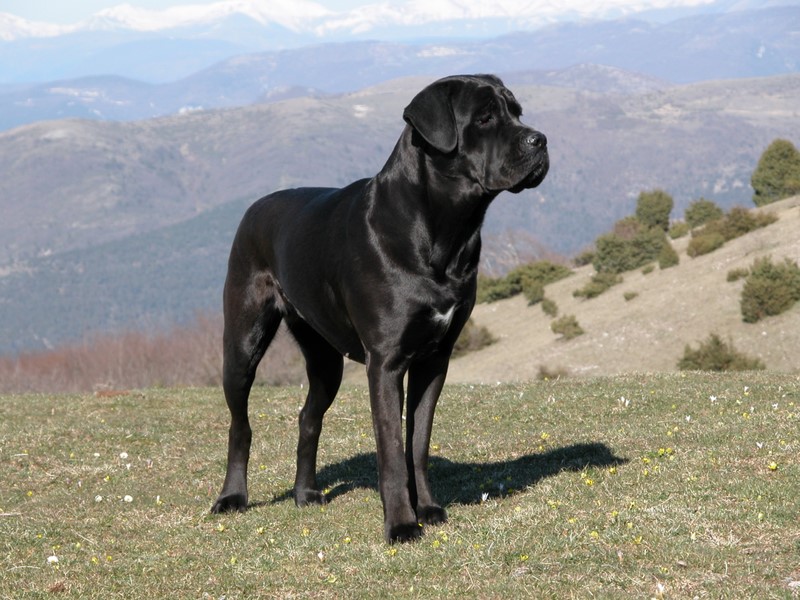
Forged in the Roman legions and refined on Italian estates for centuries, the Cane Corso is more than a guard dog—it’s a noble, intelligent, and deeply loyal companion with the heart of a protector and the mind of a strategist. Pronounced KAH-nay KOR-so, this giant molosser was once on the brink of extinction but has surged in global popularity as a versatile working and family guardian.
Yet behind its imposing 110-pound frame and intense gaze lies a dog of unexpected sensitivity—one that bonds fiercely with its family, thrives on structure, and demands experienced leadership. Misunderstood as “aggressive” due to its size and history, the Cane Corso is, in truth, calm, discerning, and stable when ethically bred and properly trained.
In this exhaustive, meticulously researched guide, you’ll learn everything about the Cane Corso: its Roman origins, physical types (traditional vs. show vs. working lines), temperament nuances, common health conditions, grooming and exercise needs, and whether your lifestyle aligns with this majestic Italian mastiff. We’ll also compare it to similar giant breeds like the Dogue de Bordeaux, Neapolitan Mastiff, and Presa Canario to clarify its unique balance of power and precision.
All information is verified through the Fédération Cynologique Internationale (FCI), American Kennel Club (AKC), Italian Cane Corso Club (SCC), Orthopedic Foundation for Animals (OFA), and top international breeders.
Origin & History
The Cane Corso traces its lineage to the Roman war dogs (Canis Pugnax)—massive molossers used in battle, hunting, and property protection. After the fall of Rome, these dogs evolved into the “Cane Corso” (from cohors, Latin for “guardian” or “protector”), serving Italian farmers as boar hunters, cattle drovers, and estate guardians.
By the mid-20th century, mechanization and war nearly erased the breed. In the 1970s, Italian enthusiasts like Dr. Paolo Breber spearheaded a revival, locating rural specimens and establishing the first breed standard. The FCI recognized the Cane Corso in 2007, and the AKC followed in 2010 (Working Group).
Unlike the Neapolitan Mastiff (bred for stationary guarding with loose skin and drool), the Cane Corso was a mobile, agile catch dog—leaner, faster, and more athletic.
Key fact: The Cane Corso is not a “bully breed”—it belongs to the Mastiff family, not the Molosser sub-group that includes Bulldogs or Pit Bulls.
Physical Characteristics
The Cane Corso is a giant, muscular, yet agile dog built for power and endurance—not bulk or exaggeration.
- Height:
- Males: 25–27.5 inches (63.5–70 cm)
- Females: 23.5–26 inches (59.5–66 cm)
(Per AKC/FCI; dogs outside this range are disqualified)
- Weight:
- Males: 99–110+ lbs (45–50+ kg)
- Females: 88–99 lbs (40–45 kg)
- Note: Weight should never compromise agility
- Coat: Short, stiff, and dense—lies flat against the body
- Colors:
- Black, gray, fawn, red, brindle (in all base colors)
- Minimal white allowed (chest, toes)—excessive white is a fault
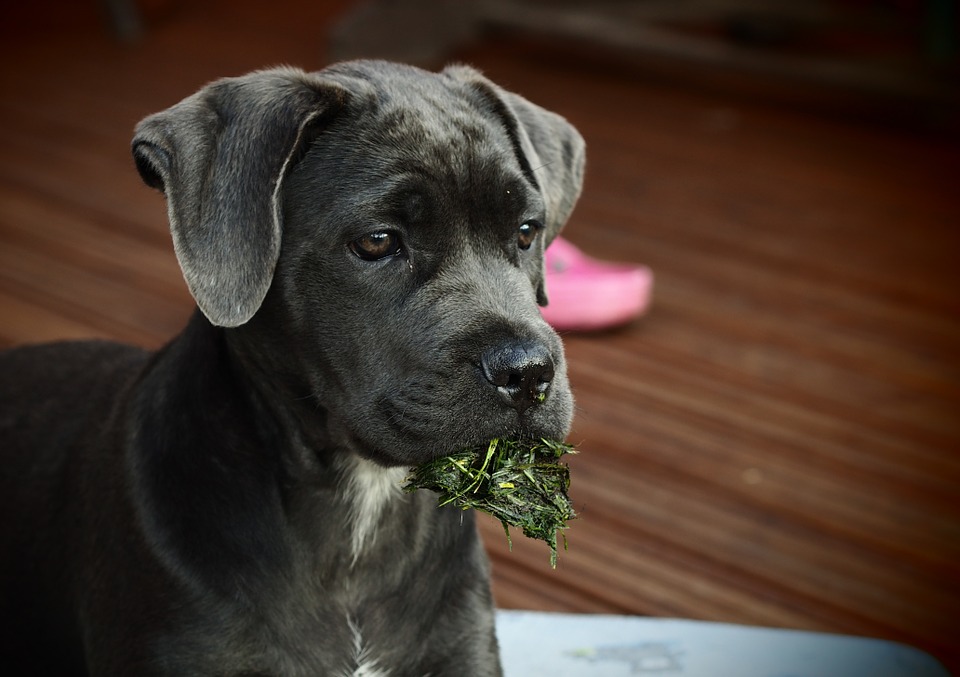
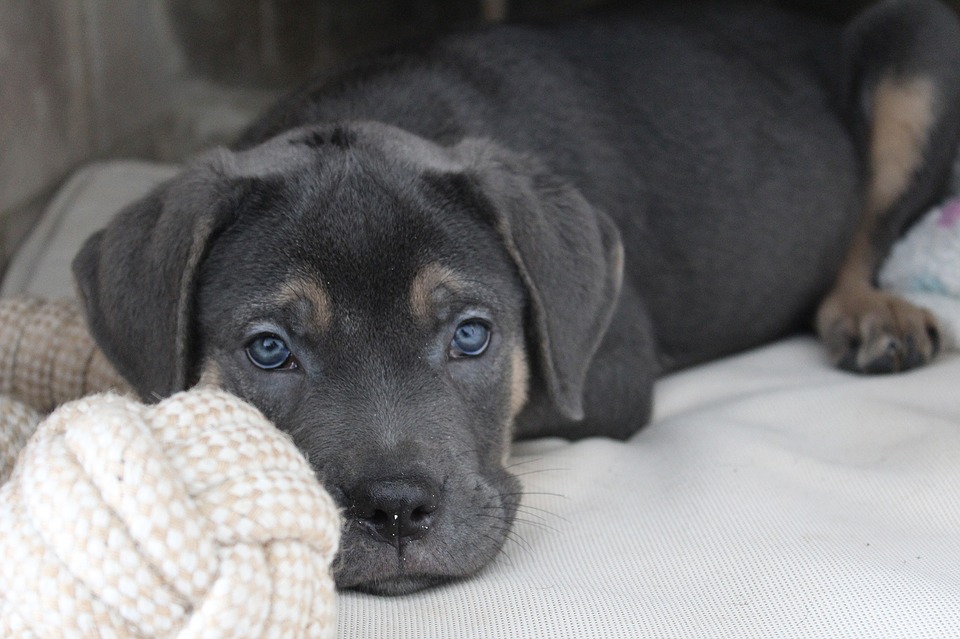
- Note: Blue (dilute) and liver are disqualified in AKC/FCI
- Head: Large but not massive; well-defined stop, powerful jaws, and scissors or slight underbite (level bite acceptable)
- Eyes: Medium-sized, almond-shaped, dark brown (light eyes are a serious fault)
- Ears: Traditionally cropped (in working lines), but natural ears are medium-sized, triangular, and hanging (AKC accepts both)
- Tail: Traditionally docked; natural tail is thick at base, tapering, carried low
Its movement is ground-covering, powerful, yet surprisingly agile—capable of quick turns while herding or hunting.
Comparison: Leaner and more athletic than the Dogue de Bordeaux (which has a massive head and brachycephalic face), and less loose-skinned than the Neapolitan Mastiff.

Types of Cane Corso: Traditional, Show, and Working Lines
While not formally recognized as “sub-breeds,” three distinct breeding lines exist—each with physical and temperamental differences:
1. Traditional/Italian Working Lines
- Origin: Rural Italy; closest to historical Corso
- Build: Lean, athletic, agile and functional
- Temperament: Confident, stable, highly trainable
- Use: Hunting, personal protection, farm work
- Traits: Natural ears/tail common; minimal exaggeration
2. American Show Lines
- Origin: U.S. show rings (post-AKC recognition)
- Build: Heavier bone, broader head, more mass
- Temperament: Calmer, less drive—but can lack working instinct
- Risk: Some lines trend toward exaggeration (overly massive heads, reduced agility)
- Traits: Often cropped ears; bred for conformation over function
3. European/FCI Show Lines
- Origin: Italy, Germany, Netherlands under FCI standard
- Build: Balanced—muscular but never bulky
- Temperament: Alert, dignified, moderate drive
- Emphasis: Adherence to FCI’s functional ideal
Critical insight: Working-line Corsos are often healthier and more behaviorally stable than extreme show lines. Ethical breeders prioritize temperament and health over size or head mass.
Temperament & Personality
The Cane Corso is loyal, intelligent, and naturally protective—but never mindlessly aggressive. It is a thinking guardian, assessing threats before acting.
- Loyalty: Forms intense bonds with family; often shadows one primary person
- Guarding instinct: Innate and strong—but should be controllable
- Trainability: Highly intelligent; responds to calm, consistent leadership
- Sensitivity: Despite its size, it’s emotionally attuned—harsh methods backfire
- Stability: Confident and calm when properly socialized; not reactive or fearful
Myth debunked: The Cane Corso is not inherently aggressive. Poor breeding, lack of socialization, or irresponsible ownership—not the breed—cause behavioral issues.
Compared to the Presa Canario (more dominant and less biddable) or Neapolitan Mastiff (more sedentary), the Cane Corso offers a unique blend of mobility, intelligence, and controlled power.
Care Requirements
Exercise
Needs 60–90 minutes of structured daily exercise:
- Brisk walks, jogging, or controlled off-leash play in secure areas
- Mental work: Obedience, tracking, scent games, or protection sports (IPO, PSA)
- Never free-roaming—strong prey/territorial instincts
Without purpose, may develop boredom barking, digging, or barrier aggression.
Grooming
- Low maintenance: Weekly brushing suffices
- Seasonal shedding: Moderate (less than Huskies, more than Dobermans)
- Bathe only as needed (2–4 times/year)
- Clean facial wrinkles (if present) and ears weekly
- Drool level: Low to moderate (far less than Neapolitan Mastiff)
Diet
High-quality, moderate-protein diet with joint support (glucosamine, chondroitin). Avoid grain-free diets unless medically necessary (linked to DCM). Monitor calories—obesity worsens joint stress.
Environment
Best in suburban or rural homes with secure, high fencing. Not ideal for apartments. Tolerates heat better than brachycephalic mastiffs but still needs shade and water.
Note: Due to its guarding instinct, early exposure to visitors, delivery people, and urban stimuli is critical.

Health & Lifespan
Average lifespan: 9–12 years (AKC, OFA)
As a giant breed, the Cane Corso faces several inherited health challenges.
Condition | Description | Prevalence | Symptoms / Notes |
|---|---|---|---|
Malformed hip joint | High risk (OFA: ~25% of tested dogs affected) | Lameness, bunny-hopping; screen breeding stock via OFA/PennHIP | |
Idiopathic Epilepsy | Seizure disorder with no known cause | Moderate risk (documented in multiple lines) | Seizures between 1–5 years; manageable with medication |
Cherry Eye | Prolapsed third eyelid gland | Common (due to loose eye tissue) | Red mass in corner of eye; surgical correction |
Demodectic Mange | Immune-related mite overgrowth | Seen in stressed pups | Patchy hair loss; often resolves with age |
Gastric Dilation-Volvulus (Bloat) | Twisted stomach | High risk (deep-chested giant) | Retching without vomiting—life-threatening emergency |
Cardiac Issues (DCM, SAS) | Heart muscle or valve defects | Emerging concern | Lethargy, coughing; annual cardiac screening recommended |
OFA data confirms Cane Corsos have higher hip dysplasia rates than average—making ethical breeding non-negotiable.
Reliable data on thyroid issues or cancer is limited, though responsible breeders test for common conditions.
Training & Socialization
The Cane Corso must be trained and socialized early—ideally before 16 weeks.
- Obedience: Start at 8 weeks; focus on recall, “leave-it,” and impulse control
- Socialization: Expose to people, dogs, sounds, and urban environments daily
- Method: Positive reinforcement with clear boundaries—never punishment-based
- Advanced training: Thrives in IPO, scent work, or therapy roles
Warning: An untrained Cane Corso is dangerous due to size and strength—not malice, but lack of control.
Compared to the Dogue de Bordeaux (more stubborn) or Presa Canario (more dominant), the Cane Corso is more biddable and responsive to leadership.
Suitability: Ideal Owner Profile
The Cane Corso thrives with:
- Experienced, confident owners familiar with giant or guardian breeds
- Structured households with clear rules and routines
- Secure property with high fencing and controlled access
- Owners committed to lifelong training, socialization, and vet care
Not recommended for:
- First-time dog owners
- Sedentary or chaotic households
- Apartments or homes with frequent strangers (without training)
- Owners seeking a “nanny dog” or low-maintenance pet
Perfect for: Protection sport enthusiasts, rural families, or experienced guardians seeking a loyal, intelligent partner.
Costs & Commitment
- Adoption: Rare; possible via mastiff rescues ($500–$1,000)
- Reputable breeder: $2,000–$4,000+ (health-tested, with temperament evaluation)
- Monthly expenses: $120–$200 (large-dog food, joint supplements, preventatives)
- Special costs: Fencing, training classes, bloat-prevention bowls, orthopedic beds
Lifetime cost estimate: $30,000–$45,000 over 10 years
Ethical Adoption vs. Breeder Guidance
Due to rising popularity, irresponsible breeding is rampant. Choose breeders who:
- Perform OFA hip/elbow, cardiac, eye, and epilepsy screenings
- Raise puppies in-home with early socialization
- Belong to the Society of Cane Corso (SCC) or AKC-affiliated clubs
- Do not overemphasize size, head mass, or “rare colors” (blue/liver)
Avoid:
- “Teacup” or “mini” Corsos (myth)
- Breeders selling “attack-trained” puppies
- Online marketplaces or pet stores
Italian dog names for your male Cane Corso
If you have a Corsican dog and are looking for a suitable name for it, you may be able to use one of the following:
Aaron, Abaco, Abram, Afro, Acer, Astra, Achille, Ala, Adelchi, Alex, Alec, Alfio, Ahmik, Amedeo, Akamu, Andra, Andrea, Alton, Argo, Amos, Arana, Aragon, Attila, Aramis, Arrigo, Asterix, Astro, Atreyo, Axel, Blue, Baffo, Baldo, Baloo, Barolo, Barret, Barù, Basco, Biagio, Biscotto, Blaster, Blues, Bomb, Boogie, Boris, Brenno, Brutus, Brigant, Buck, Bunter, Byron, Chivas, Cachito, Ciro, Caleb, Carlos, Ciriaco, Cash, Casper, Coda, Cassian, Confetto, Cassius, Corallo, Corsaro, Catullo, Celtic, Cosimo, Cesare, Chanson, Chayton, Cherif, Chester, Chucky, Ciak, Cincin, Cletus, Clint, Cocain, Cody, Cognac, Colt, Conan, Confucius, Connor, Corsaro, Dexter, Diego, Diuk, Dollar, Dusky, Dylan, Duncan, Ector, Egon, Eliot, Ferro, Fico, Florian, Folk, Frodo, Frizzi, Fuli, Fuste, Galax, Gascon, Geronimo, Giotto, Gaucho, Giove, Giuba, Grisli, Gordon, Gringo, Gustav, Hachiko, Harley, Harlock, Helki, Hulk, Ian, Icarus, Idefix, Idro, Itaco, Jack, Joti, Jackpot, Jago, Jason, Jafar, Jazz, Jester, Julina, Kaleo, Kaleb, Kaiman, Kaliman, Kangee, Kele, Kilian, Kiko, Kobe, Laio, Lancelot, Lapse, Lennox, Lester, Lexter, Lillo, Linus, Wolf, Lothar, Lukas, Male, Makya, Malik, Mota, Manfred, Mastino, Merlin, Mastin, Milo, Neo, Nawat, Nemo, Noshi, Oliver, Omero, Orpheus, Orion, Orc, Otello, Pascal, Patwin, Poncho, Pongo, Rambo, Red, Roll, Rufus, Sax, Scott, Scudo, Tango, Titan, Tex, Thor, Tito, Tobias, Guy, Tyson, User, Walker, Wolf, Woody, Xeno, Xero, Yago, Yukon, Zander, Zeph, Zero, Zoom.
Italian dog names for your female Cane Corso
Abey, Ali, Abigail, Achea, Aida, Alepi, Akemi, Akira, Alma, Beloved, Arlena, Artemide, Aura, Armpit, Bafo, Balma, Bea, Bella, Belinda, Belle, Berta, Beverly, Betti, Bimba, Bocha, Bonnie, Brenda, Brigitta, Brook, Brunilla, Belica, Caia, Cabiza, Catuya, Calypsa, Camelia, Candy, Carol, Cassandra, Castalia, Carolita, Catinka, Cayenne, Chita, Chantal, Cheope, Chepi, Girl, Cika, Coda, Contessa, Cuba, Cucca, Daffy, Daphne, Dana, Dinasty, Goddess, Doga, Dolcezza, Diva, Dulcinea, Edith, Eika, Elektra, Ella, Emilia, Eureka, Eve, Evita, Fabia, Fabula, Fata, Fanta, Febe, Fiamma, Fila, Fiona, Flora, Frida, Fujico, Gaia, Galatea, Ghia, Gilda, Ginger, Gioconda, Gitana, Glenda, Glory, Grotto, Haga, Halia, Heidi, Hella, Hula, Ibiza, Imala, Imma, Isis, Itaca, Jade, Jamba, Jamila, Jola, Juna, Kaja, Kaliska, Kara, Kiara, Kimba, Kimi, Kira, Kuka, Kora, Kreta, Laila, Lalita, Lana, Lassie, Lola, Lolita, Luna, Luvi, Maga, Magena, Malka, Mani, Melinda, Mika, Mila, Muriel, Mariel, Nala, Namid, Naomi, Nikita, Nita, N ube, Nephis, Ophelia, Olivia, Oxana, Paprika, Phoebe, Pupil, Rachel, Raisa, Riva, Roxie, Runa, Saba, Sandia, Saura, Scarlet, Selby, Shada, Soyala, Tabata, Taylor, Thelma, Tiara, Trudy, Ulla, Uliana, Uma, Ursella, Waika, Wanda, Wapa, Wilma, Winona, Xantia, Xiara, Xara, Xena, Yepa, Yira, Yuki, Zaira, Zara, Zavanna, Ziva, Zoe, Zola, Zuma.
FAQs
1. Is the Cane Corso a giant dog?
Yes—the Cane Corso is a giant breed, typically 24–28 inches tall and 88–110+ lbs.
2. Are Cane Corsos aggressive?
Not when properly bred and socialized. They’re confident guardians, not attackers.
3. What’s the difference between Cane Corso types?
Working lines are leaner and more agile; show lines are heavier; traditional lines balance both.
4. Cane Corso vs. Dogue de Bordeaux: which is better?
Dogue is more sedentary and brachycephalic; Corso is more athletic and trainable.
5. Do Cane Corsos drool a lot?
No—minimal drool compared to other mastiffs.
6. How much exercise does a Cane Corso need?
60–90 minutes daily of physical + mental activity.
7. Are Cane Corsos good with kids?
With respectful, older children—yes. Never with toddlers unsupervised due to size.
8. What colors are allowed?
Black, gray, fawn, red, brindle—no blue or liver in AKC/FCI.
Final Verdict: Is the Cane Corso Right for You?
Yes, if…
- You’re an experienced owner seeking a giant, intelligent, loyal guardian
- You can provide lifelong training, socialization, and secure space
- You value controlled power, dignity, and deep loyalty
- You’re prepared for health screening, costs, and responsibility
No, if…
- You’re a first-time owner or want a low-maintenance pet
- You can’t commit to early and ongoing training
- You live in a small space or seek a casual companion
- You believe myths about “inherent aggression”
The Cane Corso isn’t just a dog—it’s a living legacy of Roman guardianship, offering unwavering loyalty and quiet strength to those worthy of its trust.