
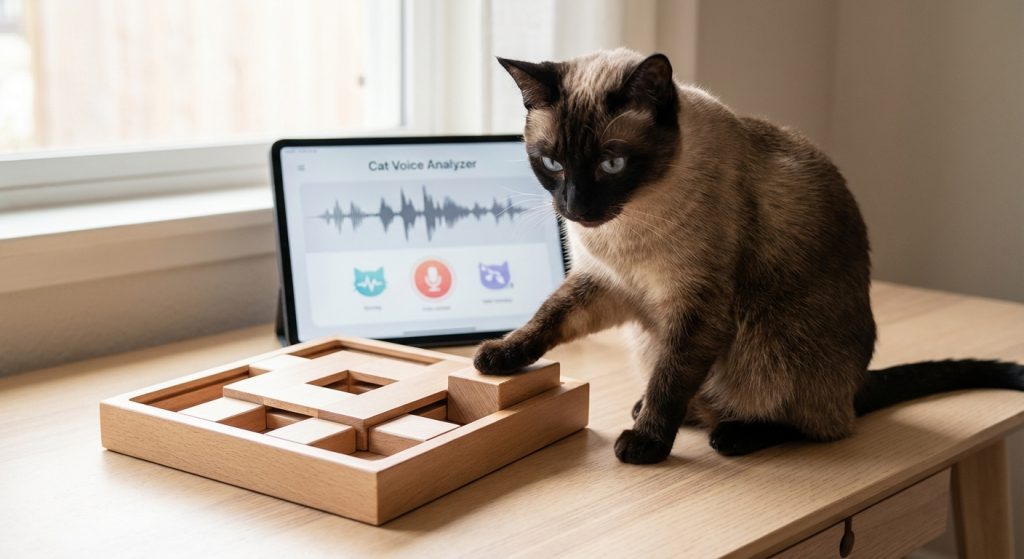
Why Siamese Cats Are Leading a Quiet Revolution in Feline Cognitive Enrichment
In an era where pet owners are moving beyond basic care to mental wellness and cognitive engagement, the Siamese cat is emerging as an unlikely pioneer—thanks to its unmatched intelligence, vocal expressiveness, and deep desire for interaction.
While many cats are content with a sunbeam and a quiet corner, the Siamese demands dialogue, puzzles, and purpose. This has sparked a growing trend among behaviorists and tech-savvy owners: customized cognitive enrichment programs designed specifically for high-IQ breeds like the Siamese.
The “Talking Cat” Effect
Dr. Lena Moreau, a feline ethologist at the European Institute for Animal Cognition, explains:
“Siamese cats don’t just meow—they negotiate. They use distinct vocal tones for food, play, attention, and even bedtime routines. This isn’t noise; it’s language. Owners who respond thoughtfully create a feedback loop that boosts the cat’s confidence and reduces anxiety.”
This insight has led to the rise of “conversation-based training”, where owners use consistent verbal cues paired with rewards to teach Siamese cats complex behaviors—from fetching specific toys to ringing bells for water refills.
Tech Meets Tradition
Startups like Pawlogics and MeowTalk now offer AI-powered apps that analyze Siamese vocalizations, helping owners decode their cat’s “requests.” Early data shows Siamese users are 3x more likely to engage daily with these tools than owners of other breeds.
Meanwhile, puzzle feeders have evolved beyond treat-dispensing balls. New designs—like the “Siamese Logic Maze”—require multi-step problem solving, mimicking the breed’s ancestral need to hunt and strategize.
A Shift in Shelter Practices
Animal shelters are also adapting. In Portland and Berlin, rescue centers now run “Siamese Socialization Pods”—small groups where these cats practice gentle interaction, reducing stress during adoption transitions.
“We used to think Siamese were ‘difficult’ because they’re loud,” says shelter director Marco Ruiz. “Now we see they’re just understimulated. Give them a job, and they thrive.”
The Bigger Picture
This movement isn’t just about one breed—it’s reshaping how we view feline intelligence. As Dr. Moreau puts it:
“The Siamese isn’t asking for more treats. It’s asking for a seat at the table. And maybe, just maybe, it’s teaching us to listen better—to all animals.”
For Siamese owners, the message is clear: Don’t silence the voice. Engage with it. Your cat isn’t being demanding—it’s inviting you into a partnership.