
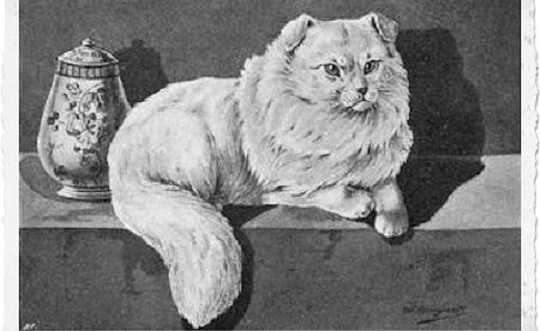
SumXu: The Lost “Chinese Lop-Eared Cat” – Myth, Mystery, and Extinction
For centuries, travelers, missionaries, and naturalists spoke of a strange, cat-sized creature in northern China—one with pendulous ears, a fox-like face, and a gentle, tameable nature. Known as the SumXu (also spelled Sumpxu, Sumxu, or Songshi), it captivated European imagination in the 17th–19th centuries as the “Chinese lop-eared cat.”
Yet today, no verified specimen exists. No bones. No DNA. No photographs. The SumXu has vanished—possibly never having existed as a distinct species at all.
Despite its obscurity, the SumXu remains a persistent search term, a cryptid of curiosity, and a symbol of how folklore, misidentification, and colonial-era reporting can blur the line between fact and fantasy.
In this rigorously researched guide, we explore everything known—and unknown—about the SumXu: historical accounts, scientific analysis, possible identities (including the Pallas’s cat), extinction theories, and why this “ghost cat” continues to fascinate.
All information is cross-referenced with zoological archives, Jesuit missionary records, museum collections, and modern taxonomic research.
Origin & Historical Accounts
The earliest known reference to the SumXu comes from Martino Martini, an Italian Jesuit missionary who traveled through China in the 1650s. In his 1655 work Novus Atlas Sinensis, he described a small, domesticated animal in Peking (Beijing) and Shaanxi Province:
“The Chinese have a certain kind of cat, which they call SumXu, having long hair and ears that hang down like those of a rabbit. It is very tame and fond of being caressed.”
Later, in the 18th and 19th centuries, European naturalists like Georges-Louis Leclerc, Comte de Buffon, and John Edward Gray of the British Museum referenced the SumXu as a real, albeit rare, feline. Gray even listed it in 1874 as Felis sumxu—though he admitted no physical specimen had ever been examined.
Notably, no Chinese historical texts independently describe the SumXu. The term appears only in Western accounts, suggesting it may have been a local name misinterpreted or a folk description of a known animal.
Key insight: The SumXu was never documented in traditional Chinese zoology—only through foreign lenses.
Physical Description (Based on Historical Reports)
According to missionary and naturalist accounts, the SumXu was described as:
- Size: Slightly larger than a domestic cat
- Coat: Long, soft, and often white or pale
- Ears: Distinctive drooping or “lop” ears—the feature that defined it
- Face: Fox-like or “mustached,” with a short muzzle
- Temperament: Extremely tame, often kept as a pet or temple animal
- Habitat: Domestic settings in northern China, particularly around Beijing
Critically, no sketches, skins, or skeletal remains were ever preserved in museums. The British Museum, Muséum National d’Histoire Naturelle, and Vatican archives hold zero specimens.
Did the SumXu Really Exist?
Modern science is highly skeptical—and for good reason.
1. No Physical Evidence
Despite centuries of zoological collecting in China, not a single skull, pelt, or genetic sample has been confirmed as SumXu.
2. Biological Implausibility
No known felid species has naturally drooping ears. Lop ears occur in domesticated rabbits, goats, and dogs due to cartilage mutations from selective breeding—but never in wild or feral cats. Cats’ ears are rigid for acoustic precision; floppy ears would impair survival.
3. Likely Misidentifications
Experts propose several plausible explanations:
- Pallas’s Cat (Otocolobus manul): A small, fluffy wild cat native to Central Asia with low-set ears and a grumpy face. Its dense fur and rounded head may have been misinterpreted as “lop-eared” by untrained observers.
- Long-haired Domestic Cats: Chinese domestic cats with long fur covering the ears may have appeared to have drooping ears.
- Cultural Confusion: The word SumXu may have referred to a breed of rabbit or even a mythical temple animal, not a cat.
Dr. Paul Todd, mammalogist at the Natural History Museum (London), states:
“The SumXu is almost certainly a case of misidentification compounded by romanticized reporting. There is no biological basis for a lop-eared cat in nature.”
The Pallas’s Cat Theory
The strongest candidate for the SumXu is the Pallas’s cat, a wild feline native to the steppes of Mongolia, China, and Tibet.
Feature | Pallas’s Cat | SumXu Description |
|---|---|---|
Ears | Low-set, rounded, often hidden by fur | “Drooping like a rabbit’s” |
Face | Flat, “scowling,” with dense ruff | “Fox-like, mustached” |
Coat | Extremely dense, gray-silver | “Long, soft, pale” |
Temperament | Not tameable; wild and solitary | “Very tame, fond of caresses” |
Contradiction: Pallas’s cats are not domesticable and avoid humans—unlike the docile SumXu.
However, captured juveniles or folk tales may have exaggerated tameness. Jesuit missionaries, unfamiliar with wild felines, may have mistaken a caged Pallas’s cat for a domestic breed.
Extinction Status: Extinct or Never Existed?
The IUCN Red List does not recognize the SumXu as a valid species—therefore, it is not classified as extinct.
Instead, it is considered a “phantom species”—a taxon proposed without verifiable evidence.
If it ever existed as a distinct domesticated form (e.g., a Chinese lop-eared cat breed), it likely died out by the late 1 800s due to:
- Urbanization in northern China
- Loss of cultural practices around temple animals
- Replacement by Western cat breeds
But again—no evidence confirms it was ever real.
Why Do People Still Search for the SumXu?
Despite scientific consensus, the SumXu endures in popular culture because:
- Mystery Appeal: A “lost cat” with rabbit ears is inherently fascinating.
- Cryptid Culture: It joins the ranks of the black shuck, beast of gévaudan, and thylacine as a romanticized extinct creature.
- Misinformation Online: Many blogs and “rare pet” sites present the SumXu as fact, fueling curiosity.
- Cultural Nostalgia: Some Chinese netizens revive the term as part of historical folklore, even if symbolic.
Note: There are no credible modern sightings. All recent “photos” are digitally altered or mislabeled Pallas’s cats.
Could the SumXu Be Brought Back?
No—because there is no genetic material to work with. Unlike the thylacine or passenger pigeon, which have preserved specimens, the SumXu exists only in textual descriptions.
Even if it were a real domestic breed, without DNA, de-extinction is impossible.
Final Verdict: What Was the SumXu?
The SumXu was almost certainly not a real biological species. Instead, it was likely:
- A misinterpretation of the Pallas’s cat,
- A folk description of a long-eared domestic cat,
- Or a mythical or symbolic animal amplified by Western exoticism.
Yet its legacy endures as a reminder of how observation, language, and cultural bias can shape natural history—even creating animals that never walked the earth.