
Belgian Malinois: Complete Guide to Temperament, Health, Care & History
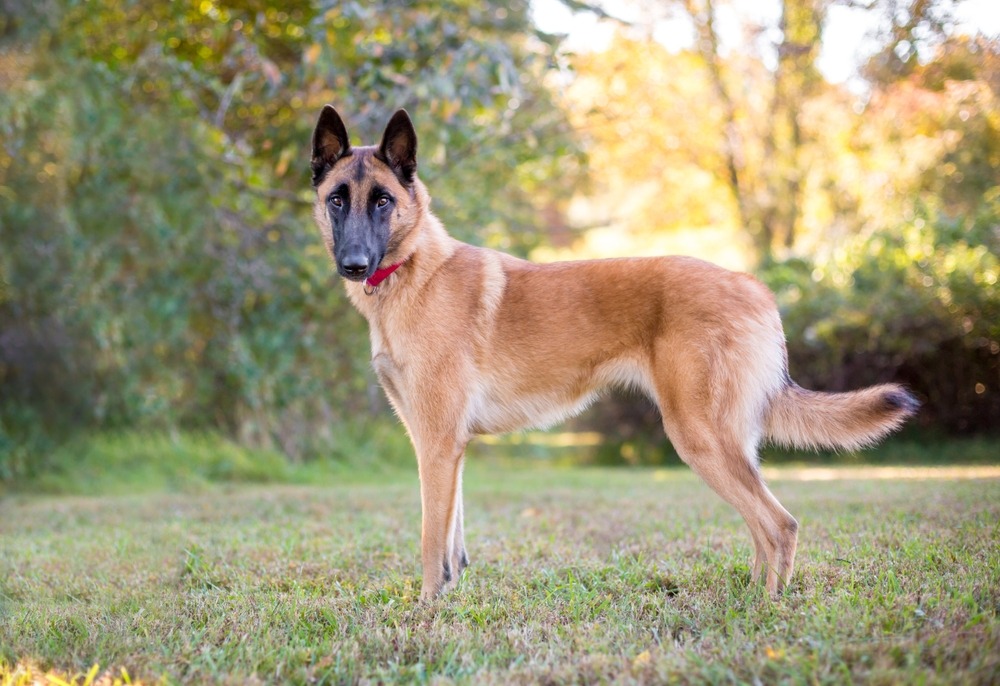
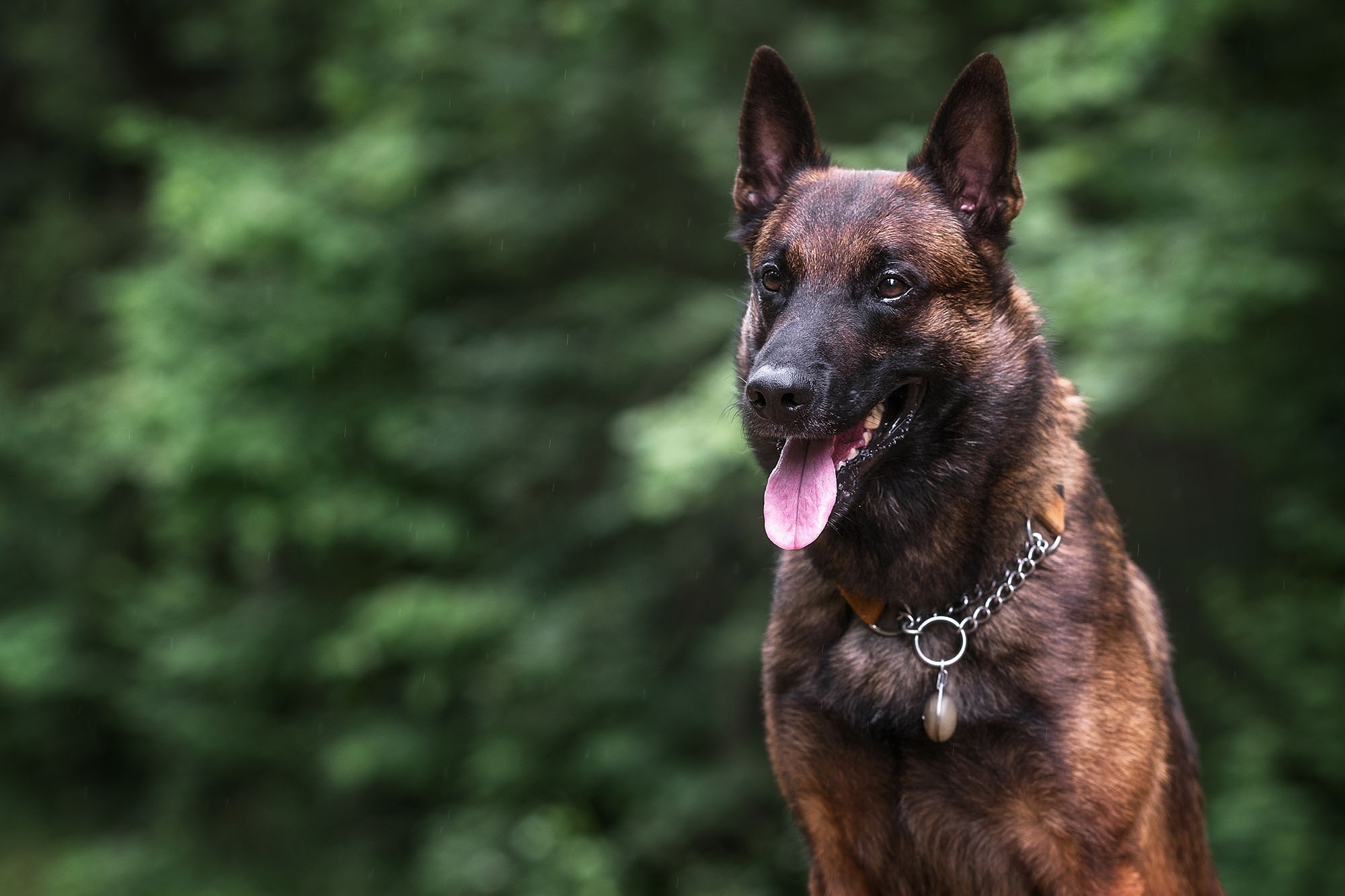
With pricked ears, a sleek fawn coat with black mask, and relentless drive, the Belgian Malinois is one of the most intense and capable working dogs in the world. Bred in Belgium as a herding dog, the Malinois has become the global standard for military, police, and protection work—trusted by elite units like the U.S. Navy SEALs (famously used in the Bin Laden raid).
But behind its elite reputation lies a complex truth: the Belgian Malinois is not a casual pet. It demands extreme physical exercise, advanced mental challenges, and expert handling. Without purpose, it can become anxious, destructive, or obsessive. Yet in the right hands, it offers unmatched loyalty, intelligence, and partnership.
In this guide, you’ll learn everything about the Belgian Malinois temperament, health problems, care requirements, and whether your lifestyle can meet the demands of this high-octane medium working dog. All information is verified through the American Kennel Club (AKC), Belgian Shepherd Dog Club of America (BSDCA), and working-dog professionals.
Origin & History
The Belgian Malinois is one of four varieties of the Belgian Shepherd, developed in the late 1800s in Malines (Mechelen), Belgium. While the Groenendael (black), Tervuren (long fawn), and Laekenois (rough-coated) were bred for show or versatility, the Malinois was selected for herding endurance and drive.
Its short coat and athletic build made it ideal for long days moving cattle across rough terrain. By the 20th century, its intelligence and trainability led to roles in police, military, and search-and-rescue. Today, it’s the most widely used K-9 breed globally—valued for its speed, bite strength, and off-switch when properly trained.
Key fact: The Belgian Malinois is often mistaken for a German Shepherd—but it’s lighter, faster, and more driven.
Physical Characteristics
The Belgian Malinois is a medium-sized, athletic, and muscular dog built for speed and agility.
- Height:
- Males: 24–26 inches (61–66 cm)
- Females: 22–24 inches (56–61 cm)
- Weight:
- Males: 55–75 lbs (25–34 kg)
- Females: 40–60 lbs (18–27 kg)
- Coat: Short, straight, and weather-resistant with dense undercoat
- Color: Fawn to mahogany with black mask, ears, and overlay
- Build: Square-proportioned, deep chest, tucked abdomen, and level topline
- Eyes: Almond-shaped, dark brown, with an alert, intelligent expression
- Tail: Long, reaching to hock, carried low with slight curve at rest
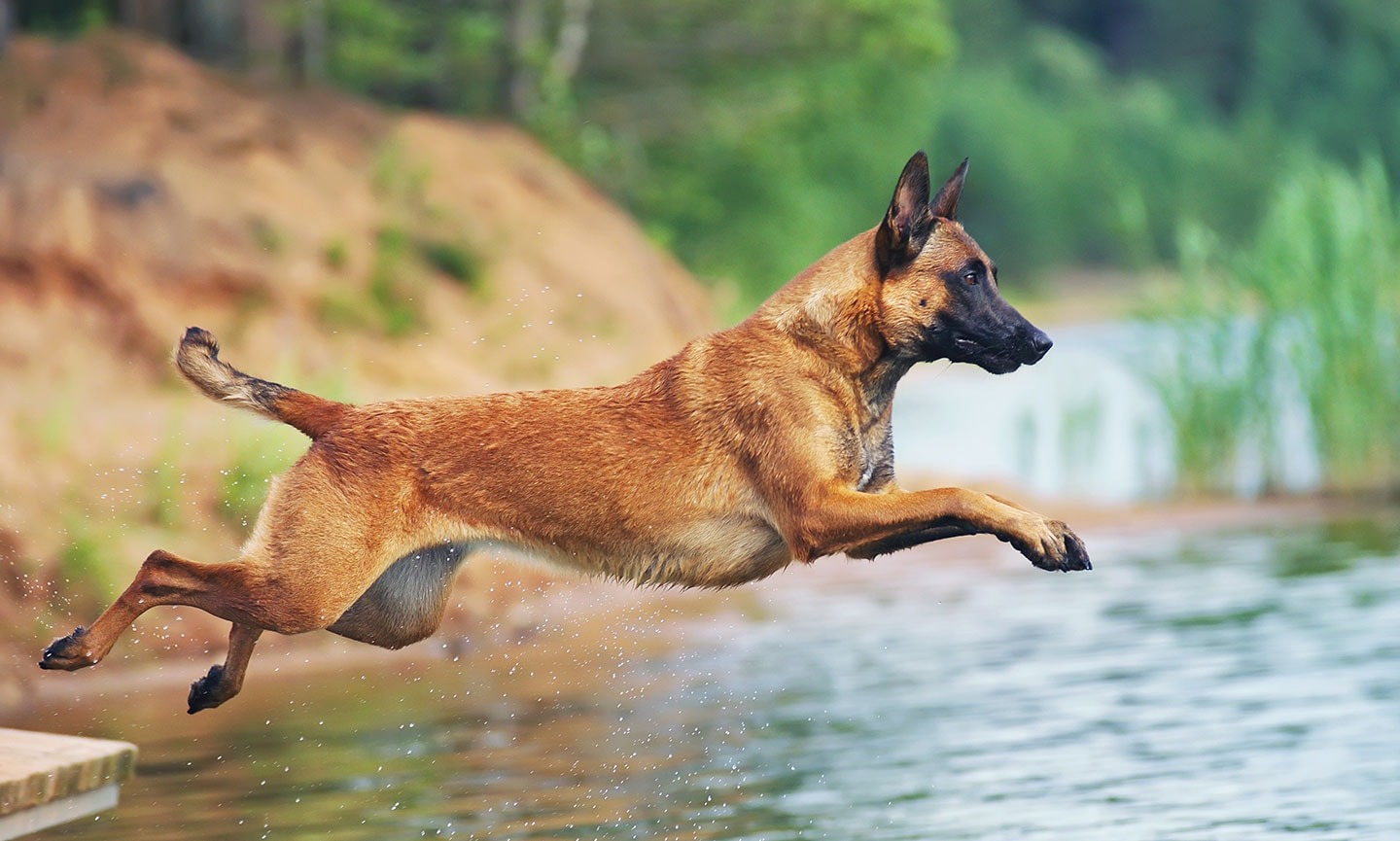
Its movement is effortless, ground-covering, and explosive—ideal for sudden sprints and sharp turns.
Comparison: More driven and intense than the German Shepherd, and less bulky than the Dutch Shepherd.
Belgian Malinois Temperament
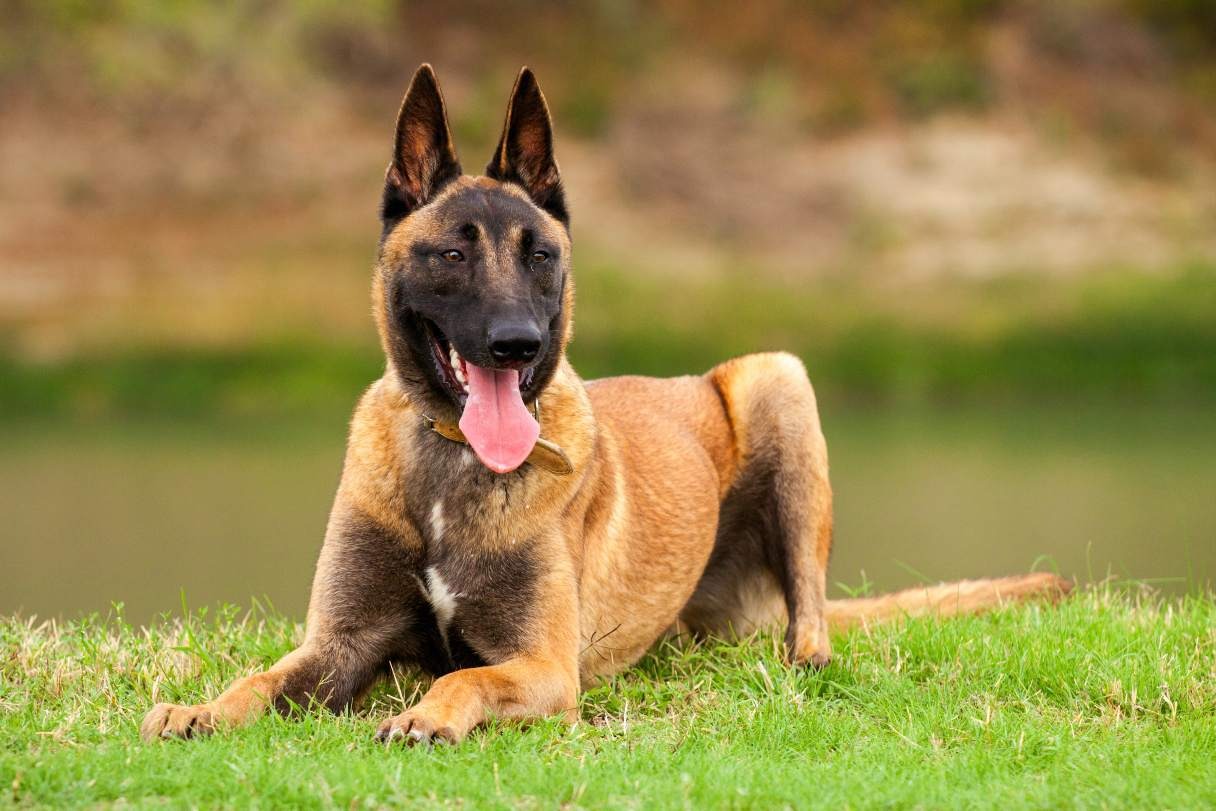
The Belgian Malinois temperament is defined by high drive, intelligence, and loyalty—but also intensity and sensitivity.
- Work Ethic: Needs a job—protection, detection, agility, or advanced obedience
- Loyalty: Bonds intensely with handler; often reserved with strangers
- Trainability: Extremely intelligent; learns commands in 1–2 repetitions
- Energy Level: Extremely high—requires 2+ hours of vigorous exercise daily
- Prey Drive: Very high—will chase small animals if not contained
- Stability: Confident and focused when properly trained; not nervous or reactive
Myth debunked: The Belgian Malinois is not inherently aggressive—it’s task-focused. Poor training—not the breed—causes behavioral issues.
Compared to the Dutch Shepherd, the Malinois is more intense and less adaptable; compared to the German Shepherd, it’s faster and less tolerant of inactivity.
Belgian Malinois Care Requirements
Exercise Needs
The Belgian Malinois needs 2+ hours of vigorous daily exercise, including:
- Running, biking, or off-leash sprinting in secure areas
- Mental work: Bite work, scent detection, agility, or complex obedience
- Never satisfied with walks alone—must have a “mission”
Without sufficient outlet, may develop obsessive circling, destruction, or self-harm.
Grooming Needs
- Moderate shedding year-round; “blows coat” twice a year
- Brush 2–3 times weekly (daily during shedding peaks)
- Bathe only as needed (2–4 times/year)
- Trim nails regularly; clean ears weekly
Tip: A slicker brush and undercoat rake manage shedding effectively.
Diet & Environment
- High-quality, high-protein diet with joint support
- Best in rural or suburban homes with secure fencing
- Not suited for apartments or sedentary households
- Thrives in active, structured environments with clear leadership
Belgian Malinois Health Problems
Average lifespan: 14–16 years (AKC, BSDCA)—longer than many working breeds due to lean build.
Condition | Prevalence | Symptoms / Notes |
|---|---|---|
Hip Dysplasia | Moderate (OFA: ~15% affected) | Lameness; screen breeding stock |
Progressive Retinal Atrophy (PRA) | Low but present | Night blindness; genetic test available |
Epilepsy | Occasional | Seizures; manageable with medication |
Gastric Dilation-Volvulus (Bloat) | Moderate risk | Retching without vomiting—emergency |
Reputable breeders test for hips, eyes, and elbows—never buy from those who skip screening.
Training & Socialization
Early, extensive socialization is critical (8–16 weeks):
- Expose to people, sounds, surfaces, and controlled dog interactions
- Use positive reinforcement with high-drive rewards (tug, ball, praise)
- Focus on impulse control, off-switch, and calm behavior
- Never use punishment—this sensitive dog shuts down or becomes defensive
Warning: An under-stimulated Belgian Malinois can become neurotic or unmanageable.
Suitability: Is the Belgian Malinois Right for You?
✅ Ideal for:
- Police/military handlers
- Protection sport competitors (IPO, French Ring)
- Experienced working-dog owners with active lifestyles
- Homes that can provide 2+ hours of daily physical/mental work
❌ Not ideal for:
- First-time dog owners
- Sedentary or frequently absent households
- Families seeking a casual pet or off-leash companion
- Anyone unprepared for extreme drive and intensity
Perfect role: Elite working partner—not a family pet.
Costs & Commitment
- Adoption: Rare outside working lines ($500–$1,500)
- Reputable breeder: $2,500–$5,000+ (health-tested, working-line)
- Monthly expenses: $100–$180 (food, training, preventatives)
- Special costs: Bite sleeves, agility equipment, professional training
Lifetime cost estimate: $30,000–$45,000 over 15 years
Ethical Breeder Guidance
Choose breeders who:
- Perform OFA hip, elbow, and eye clearances
- Provide working titles or certifications
- Raise puppies with early socialization and drive testing
- Belong to the Belgian Shepherd Dog Club of America (BSDCA)
Avoid breeders selling “pet-quality” Malinois without drive assessment—this breed’s essence is function, not form.
FAQs
1. Is the Belgian Malinois a medium dog?
Yes—the Belgian Malinois is a medium-sized breed, typically 22–26 inches tall and 40–75 lbs.
Yes—the Belgian Malinois is a medium-sized breed, typically 22–26 inches tall and 40–75 lbs.
2. Are Belgian Malinois good with kids?
Only with older, respectful children in highly structured homes. Not suitable for toddlers.
Only with older, respectful children in highly structured homes. Not suitable for toddlers.
3. Do Belgian Malinois shed a lot?
Moderately—weekly brushing manages it; more during seasonal “blowouts.”
Moderately—weekly brushing manages it; more during seasonal “blowouts.”
4. Belgian Malinois vs. German Shepherd: what’s the difference?
Malinois is lighter, faster, more driven, and less tolerant of inactivity.
Malinois is lighter, faster, more driven, and less tolerant of inactivity.
5. How much exercise does a Belgian Malinois need?
2+ hours daily of vigorous physical and mental work—non-negotiable.
2+ hours daily of vigorous physical and mental work—non-negotiable.
6. Are Belgian Malinois aggressive?
Not when properly bred and trained—but they are high-drive and protective.
Not when properly bred and trained—but they are high-drive and protective.
7. Can Belgian Malinois live in apartments?
No—they require space, structure, and constant engagement.
No—they require space, structure, and constant engagement.
8. What happens if a Belgian Malinois gets bored?
May develop obsessive behaviors, destruction, or self-injury.
May develop obsessive behaviors, destruction, or self-injury.
Final Verdict
The Belgian Malinois is not a dog for everyone—but for those who can meet its demands, it offers unmatched intelligence, loyalty, and partnership. If you’re an experienced handler seeking a high-drive working dog, this medium working breed may be your ultimate partner.