
Kishu Ken: Complete Guide to Temperament, Health, Care & History
In the misty mountains of Wakayama and Mie Prefectures on Japan’s Honshu Island, a noble and silent hunter has thrived for centuries: the Kishu Ken. Pronounced kee-shoo ken, this medium-sized Nihon Ken (Japanese native dog) was bred to track and corner wild boar and deer through dense forests—requiring courage, stamina, and unwavering focus.
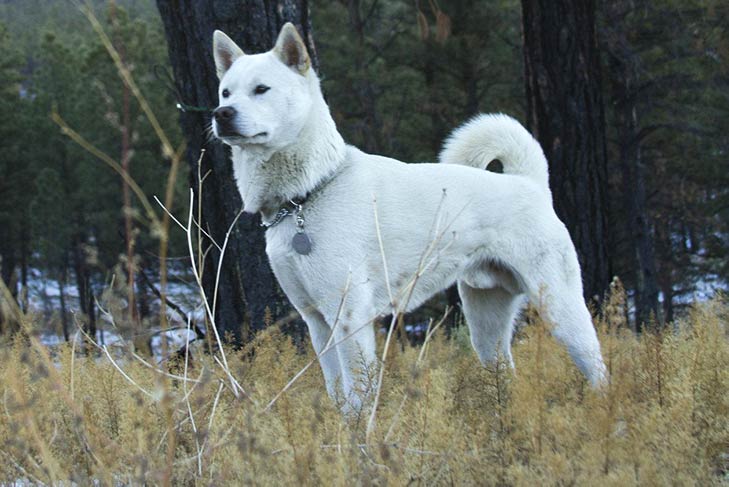
Recognized as a Living Natural Monument of Japan in 1934, the Kishu Ken remains one of the country’s most culturally revered yet globally rare breeds. Often confused with the Shiba Inu or Shikoku Inu, the Kishu stands apart with its predominantly white coat, calm intensity, and deeply loyal nature.
If you’re drawn to primitive, independent breeds with historical depth, this guide offers comprehensive, verified insights into the Kishu Ken’s origin, temperament, health, exercise needs, and ideal home environment. We’ll also compare it to close relatives like the Shikoku Inu, Kai Ken, and Hokkaido Ken to clarify its unique profile among Japan’s native spitz breeds.
All data is cross-referenced with the Nihon Ken Hozonkai (NIPPO), Fédération Cynologique Internationale (FCI), Japanese preservation societies, and international breeders.
Origin & History
The Kishu Ken originates from the Kishu region (modern-day Wakayama and Mie Prefectures) of Japan, where it was historically known as the “Kishu Inu” or “Kishu dog.” For over 1,000 years, it served Matagi (traditional hunters) in tracking and holding large, dangerous game—particularly wild boar—often working in silence to avoid alerting prey.
Unlike Western breeds shaped by aesthetics, the Kishu Ken was refined by natural selection and functional necessity. Its white coat may have been favored for visibility in dense forests or as a symbol of purity in Shinto tradition.
By the early 20th century, crossbreeding threatened its genetic purity. In 1934, the Japanese government designated it a Natural Monument, spurring formal preservation efforts. Today, fewer than 5,000 Kishu Ken exist worldwide, with the vast majority still in Japan.
Key distinction: While the Shiba Inu hunted birds and small game, and the Shikoku Inu pursued boar in steep terrain, the Kishu Ken was bred for stealth, endurance, and silent determination in thick woodland—making it exceptionally calm and focused.
Physical Characteristics
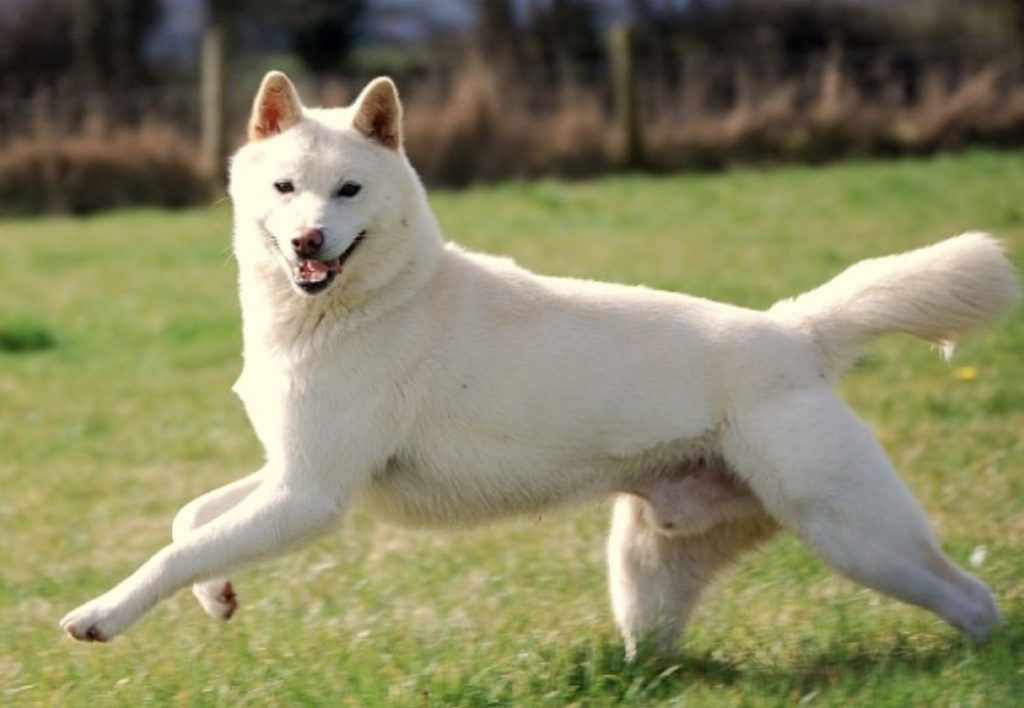
The Kishu Ken is a medium-sized, athletic spitz built for agility and resilience—not speed or bulk.
- Height:
- Males: 19–22 inches (49–55 cm)
- Females: 17–20 inches (43–51 cm)
(Per FCI and NIPPO standards)
- Weight: 30–60 lbs (14–27 kg)—lean, muscular, and never coarse
- Coat: Double coat—straight, harsh outer guard hairs with dense undercoat; sheds heavily twice a year
- Colors:
- White (over 90% of modern Kishu Ken; preferred in Japan)
- Historically also red and sesame—but these are now extremely rare and not accepted in FCI shows
- Build: Balanced proportions, deep chest, level topline, and a tightly curled tail carried over the back
- Eyes: Almond-shaped, dark brown, and set slightly oblique—conveying calm alertness
- Ears: Small, erect, and forward-facing
Its movement is smooth, silent, and efficient—ideal for stalking through underbrush without rustling leaves.

Comparison: Like the Shikoku Inu, the Kishu Ken is larger and more serious than the Shiba Inu, but its white coat and quieter demeanor set it apart even among Nihon Ken.
Temperament & Personality
The Kishu Ken is loyal, calm, and deeply devoted to its family—but reserved with strangers. It is not aloof like the Akita, nor mischievous like the Shiba; instead, it offers steady, quiet companionship and vigilant awareness.
- Loyalty: Forms intense bonds with one or two people; often follows silently
- Independence: Bred to work autonomously—respects leadership but won’t blindly obey
- Alertness: Naturally watchful; will notify of unusual activity but rarely barks excessively
- Prey drive: High—will chase small animals if not contained
- Stability: Emotionally balanced when properly socialized; not prone to anxiety or reactivity
Unlike the more vocal Shiba Inu or intense Shikoku Inu, the Kishu Ken is notably serene, earning it the nickname “the silent hunter.”
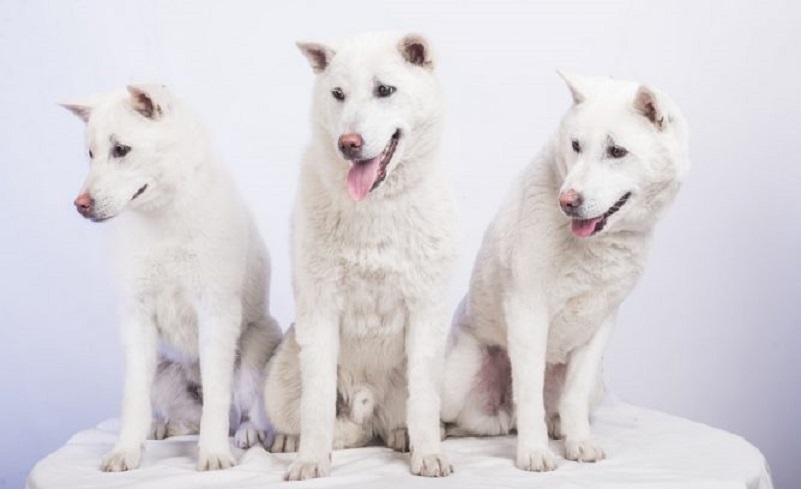
Important: Early, positive socialization (8–16 weeks) is essential to prevent shyness or suspicion of strangers.
Care Requirements
Exercise
The Kishu Ken needs 60–90 minutes of daily exercise, including off-leash exploration in a secure area, hiking, or scent work. While not hyperactive, it thrives on mental and physical engagement.
Without purpose, it may become withdrawn or subtly destructive (e.g., digging, chewing).
Grooming
- Heavy seasonal shedder (“blows coat” in spring and fall)
- Brush 2–3 times weekly (daily during shedding peaks)
- Bathe only as needed—over-bathing strips natural skin oils
- Clean ears and trim nails regularly
Diet
High-quality, moderate-protein diet with omega-3/6 fatty acids to support coat and skin health. Avoid overfeeding—this lean breed gains weight easily in sedentary homes.
Environment
Best suited to rural or suburban homes with secure, high fencing. Not ideal for apartments unless heavily exercised. Tolerates cold well due to double coat; provide shade in extreme heat.
Comparison: Like the Kai Ken, the Kishu Ken adapts well to active households—but it’s less vocal and more composed than most spitz breeds.
Health & Lifespan
Average lifespan: 12–15 years (NIPPO, FCI)
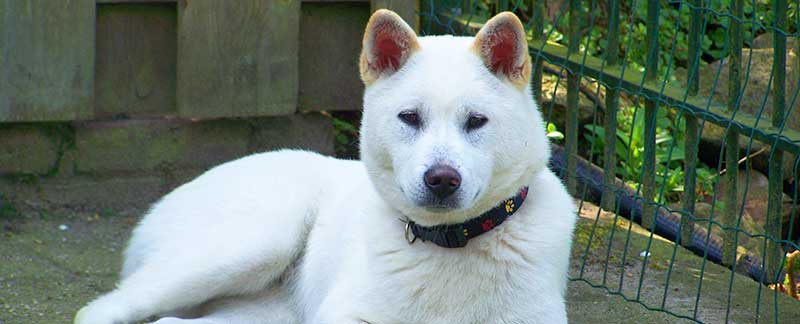
Thanks to its genetic isolation and natural selection, the Kishu Ken is generally robust and long-lived. However, limited global data means some risks are not yet fully documented.
Condition | Description | Prevalence in Kishu Ken | Symptoms / Notes |
|---|---|---|---|
Hip Dysplasia | Malformed hip joint | Low to moderate (anecdotal reports) | Lameness, reluctance to jump; screen breeding stock |
Allergies / Atopy | Environmental or food sensitivities | Reported in some lines | Itching, ear infections, paw licking |
Hypothyroidism | Underactive thyroid | Rare but possible | Weight gain, lethargy; manageable with medication |
Patellar Luxation | Slipping kneecap | Low risk (common in medium spitz breeds) | Occasional skipping gait |
Dental Crowding | Due to compact jaw structure | Occasional | Regular brushing recommended |
Note: Reliable large-scale health data on the Kishu Ken is extremely limited due to its rarity. However, Japanese breeders report few inherited disorders in pure NIPPO lines.
Responsible breeders perform OFA hip evaluations and annual vet checks, though formal genetic testing panels are not yet standardized for the breed.
Training & Socialization
The Kishu Ken is intelligent and observant, but not eager to please for praise alone. Training must be calm, consistent, and meaningful.
- Start socialization before 14 weeks: expose to people, dogs, urban sounds, and handling
- Use high-value rewards (boiled chicken, freeze-dried liver)
- Focus on recall, “leave-it,” and impulse control—critical given its prey drive
- Never use punishment—this breed withdraws or loses trust
Compared to the Shiba Inu, the Kishu Ken is more biddable and less prone to stubbornness. Compared to the Shikoku Inu, it’s calmer and less intense—making it slightly more adaptable for experienced owners.
Suitability: Ideal Owner Profile
The Kishu Ken thrives with:
- Experienced dog owners familiar with primitive or spitz breeds
- Calm, active households that provide structure and mental engagement
- Secure rural or spacious suburban homes with fencing
- Owners who value quiet loyalty and dignity over constant interaction
Not recommended for:
- First-time dog owners
- Chaotic or frequently changing environments
- Homes with small pets (unless raised together from puppyhood)
- Urban apartments without extensive daily exercise
Like the Hokkaido Ken, the Kishu Ken suits those who appreciate cultural heritage, emotional depth, and functional intelligence.
Costs & Commitment
- Adoption: Extremely rare outside Japan; few international rescues exist ($1,000–$2,000 if available)
- Reputable breeder: $2,500–$4,500+ (often requires waiting lists, home checks, and export coordination)
- Monthly expenses: $80–$130 (food, grooming, preventatives)
- Special costs: Fencing, training, potential international shipping/import fees
Lifetime cost estimate: $22,000–$30,000 over 13 years
Ethical Adoption vs. Breeder Guidance
Due to its cultural status and rarity, ethical breeding is critical. Choose breeders who:
- Are affiliated with NIPPO or FCI-recognized clubs
- Prioritize temperament, health, and working heritage over color or conformation
- Raise puppies in-home with early socialization
- Provide pedigree documentation and health clearances
Avoid online sellers advertising “rare white Japanese dogs” without verifiable lineage. The Kishu Ken’s future depends on preserving its genetic purity and cultural legacy.
FAQs
1. Is the Kishu Ken a medium dog?
Yes—the Kishu Ken is a medium-sized breed, typically 17–22 inches tall and 30–60 lbs.
2. Are Kishu Ken good with kids?
With respectful, older children—yes. Supervise due to size and prey drive; not suited for rough play.
3. Do Kishu Ken bark a lot?
No—they’re among the quietest Nihon Ken, barking only to alert.
4. Kishu Ken vs. Shiba Inu: what’s the difference?
Kishu is larger, calmer, predominantly white, and bred for big-game hunting; Shiba is smaller, more playful, and prone to vocal “Shiba screams.”
5. How rare is the Kishu Ken?
Extremely rare—fewer than 300 exist outside Japan; not recognized by the AKC (only FCI).
6. Are Kishu Ken aggressive?
Not when properly socialized. They’re reserved, not hostile—a trait of a good guardian.
7. Can Kishu Ken live in apartments?
Only with rigorous daily exercise—not ideal for sedentary lifestyles.
8. Do they shed a lot?
Yes—especially during seasonal “blowouts” twice a year.
Final Verdict: Is the Kishu Ken Right for You?
Yes, if…
- You’re an experienced owner seeking a medium-sized, calm, loyal companion with ancient roots
- You lead a structured, active lifestyle and can provide secure outdoor space
- You value quiet dignity, independence, and cultural heritage
- You’re prepared to wait for an ethical breeder and commit long-term
No, if…
- You’re a first-time owner or prefer a low-maintenance pet
- You live in a small apartment without exercise access
- You want a dog that’s effusively affectionate or highly obedient
- You can’t handle heavy shedding or independent thinking
The Kishu Ken isn’t just a dog—it’s a silent guardian of Japanese mountain tradition, offering unwavering loyalty to those who earn its quiet trust.