

Whippet: Complete Guide to Temperament, Health, Care & History
Nicknamed the “poor man’s racehorse,” the Whippet combines the athletic grace of a Greyhound with the calm, affectionate nature of a perfect companion dog. This medium-sized sighthound—standing just 18–22 inches tall—was bred by English working-class families in the 19th century for rabbit coursing and racing. Yet today, it’s better known for curling up on the couch like a feline shadow, offering gentle loyalty without drama.
If you’re considering a Whippet—or simply intrigued by elegant, low-maintenance dogs—this guide delivers comprehensive, vet-backed insights into the breed’s history, temperament, health vulnerabilities, exercise needs, and ideal living conditions. We’ll also compare the Whippet to similar sighthounds like the Italian Greyhound, Greyhound, and Saluki to help you understand where it fits among its relatives.
All data is verified through the American Kennel Club (AKC), Orthopedic Foundation for Animals (OFA), UK Kennel Club, and veterinary research—ensuring accuracy, depth, and practical value for owners and enthusiasts alike.
Origin & History
The Whippet emerged in Victorian England as a smaller, more affordable alternative to the Greyhound. Coal miners, factory workers, and farmers bred them for “rag racing”—a sport where dogs chased a rag on a string—and for hunting small game.
Despite its working-class roots, the Whippet quickly gained popularity across Europe and North America for its speed, docility, and striking appearance. The AKC officially recognized the breed in 1888, and it remains one of the most consistently ranked sighthounds in the U.S.
Unlike the Saluki (an ancient Middle Eastern breed) or the Azawakh (a West African guardian), the Whippet is a modern composite breed, likely developed from Greyhounds crossed with smaller terriers or Italian Greyhounds. This gives it a unique blend of athleticism and adaptability.
Fun fact: A Whippet named “Reckless II” set a 200-yard racing record in 1956 that stood for over 40 years—reaching speeds up to 35 mph.
Physical Characteristics
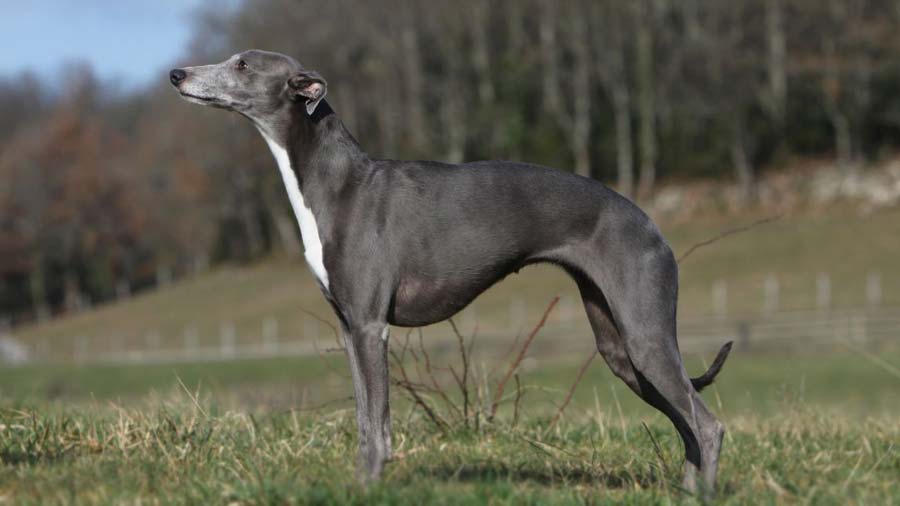
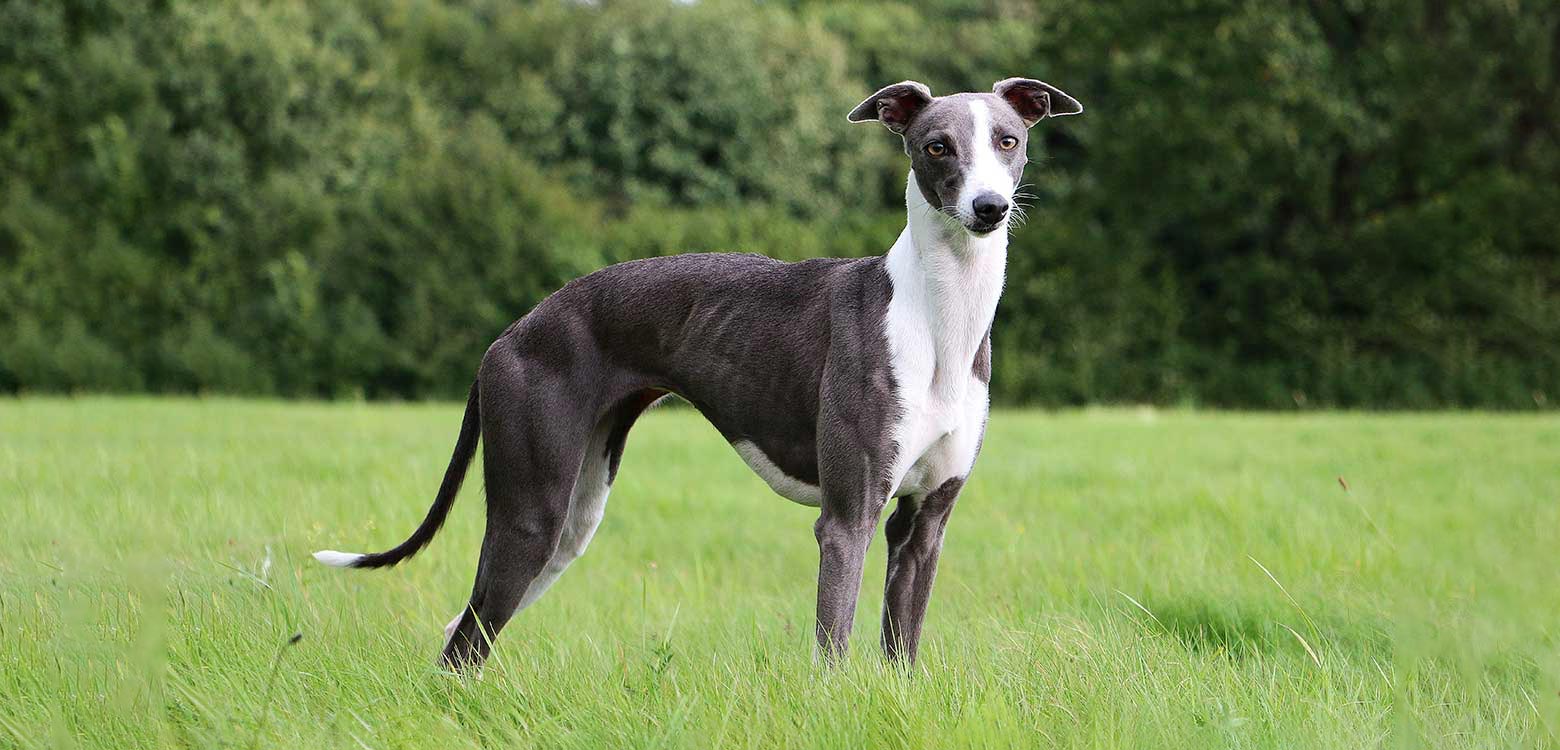
The Whippet is a medium-sized, smooth-coated sighthound built for explosive speed and agility, yet compact enough for apartment living.
- Height:
- Males: 19–22 inches (48–56 cm)
- Females: 18–21 inches (46–53 cm)
(Per AKC standard)
- Weight: 25–40 lbs (11–18 kg)—light but muscular
- Coat: Short, fine, and close-lying; comes in any color or pattern (brindle, fawn, black, white, piebald, etc.)
- Build: Sleek, arched neck, deep chest, tucked abdomen, and a long, tapering tail
- Eyes: Oval, dark, and expressive—conveying sweetness and curiosity
- Ears: Small, rose-shaped, and held back when relaxed
Its body is lean but not extreme—unlike the Azawakh, ribs should be visible but not protruding. The Whippet’s movement is smooth, low, and efficient, covering ground with minimal effort.
Comparison: Smaller and more compact than the Greyhound, and far sturdier than the Italian Greyhound, the Whippet strikes a perfect balance between speed and domesticity.
Temperament & Personality
The Whippet is often described as “45 mph on the track, 0 mph on the sofa.” At home, it’s calm, quiet, and deeply affectionate—ideal for relaxed households.
- Affection: Loves cuddling and often follows owners from room to room
- Gentleness: Exceptionally good with respectful children and calm adults
- Sensitivity: Reacts poorly to harsh voices or punishment; thrives on praise and treats
- Prey drive: High—will chase squirrels, rabbits, or fluttering leaves
- Quiet nature: Rarely barks; not a watchdog, but will alert to unusual activity
Unlike the more reserved Saluki or independent Azawakh, the Whippet is social, people-oriented, and eager to please—closer in temperament to a companion spaniel than a desert sighthound.
Note: Whippets may suffer from separation anxiety if left alone for long hours. They bond intensely with their people.
Care Requirements
Exercise
Despite its sprinter’s build, the Whippet needs only 30–60 minutes of daily exercise—preferably including 1–2 short bursts of off-leash running in a secure area. A fenced yard (minimum 5–6 feet tall) is essential, as they can bolt and disappear in seconds.
Leash walks alone won’t satisfy their instinct to chase—but once they’ve had their sprint, they’re happy to nap for hours.
Grooming
Minimal. Weekly brushing removes loose hair. Baths only as needed. Regular dental care and nail trims are advised.
Diet
High-quality, moderate-protein diet. Due to low body fat, avoid overfeeding—obesity stresses joints. Some Whippets are prone to food sensitivities, so limited-ingredient diets may help.
Environment
Adaptable to apartments, houses, and even cold climates—with indoor access and a coat in winter. Their thin skin and lack of fat make them susceptible to cold below 40°F (4°C).
Comparison: Like the Italian Greyhound, the Whippet needs winter clothing—but it’s far more robust and less fragile.
Health & Lifespan
Average lifespan: 12–15 years (AKC, UK Kennel Club)
The Whippet is generally a healthy, hardy breed, but a few inherited conditions are documented.
Condition | Description | Prevalence in Whippet | Symptoms / Notes |
|---|---|---|---|
Von Willebrand’s Disease (vWD) | Inherited bleeding disorder | Low to moderate (Type I most common) | Prolonged bleeding after injury/surgery; DNA test available |
Mitral Valve Disease (MVD) | Heart valve degeneration | Increasingly reported in older dogs | Murmur, coughing, fatigue; annual cardiac checks after age 6 |
Cutaneous Asthenia (Ehlers-Danlos) | Fragile skin and connective tissue | Rare but serious | Skin tears easily, hypermobile joints; no cure—ethical breeders avoid affected lines |
Anesthetic Sensitivity | Due to low body fat and metabolism | Moderate risk | Requires sighthound-safe protocols; avoid acepromazine |
Osteosarcoma | Bone cancer | Slightly elevated vs. non-sighthounds | Lameness, swelling; more common in older dogs |
OFA data shows <1% hip dysplasia and very low incidence of eye disorders—excellent for a purebred.
Reliable data on epilepsy or hypothyroidism in Whippets is limited, though routine screenings are still recommended.
Training & Socialization
The Whippet is intelligent and eager to please, but easily bored by repetition. Training should be short, positive, and fun.
- Use high-value treats (chicken, cheese)
- Focus on recall and “leave-it”—critical for safety
- Early socialization (8–16 weeks) prevents shyness
- Off-leash reliability is unlikely—always use a long line or secure field
Compared to the more independent Saluki or dignified Sloughi, the Whippet is easier to train and better suited to first-time sighthound owners.
Suitability: Ideal Owner Profile
The Whippet thrives with:
- Active but calm households (singles, couples, seniors)
- Owners who enjoy quiet companionship and gentle affection
- Access to secure sprint space (fenced yard or dog park)
- People who can provide winter clothing and indoor comfort
Not recommended for:
- Homes with small pets (unless raised together)
- Extremely cold climates without accommodations
- Owners seeking a guard dog or high-energy playmate
Perfect for: Urban dwellers seeking a medium-sized, low-shedding, calm dog with a hidden athletic side.
Costs & Commitment
- Adoption: Common via Greyhound/Whippet rescues ($200–$500)
- Reputable breeder: $1,500–$2,500 (health-tested)
- Monthly expenses: $60–$100 (food, preventatives, grooming)
- Special costs: Fencing, winter coats, vWD DNA test ($70–$100)
Lifetime cost estimate: $15,000–$22,000 over 13 years
Ethical Adoption vs. Breeder Guidance
Whippets are frequently available through rescues due to retired racers or owner surrenders. Adoption is highly encouraged.
If buying from a breeder:
- Ensure OFA cardiac, eye, and vWD testing
- Ask about temperament and litter socialization
- Avoid “teacup” or “mini” Whippets—these are unethical crosses
Reputable breeders are often affiliated with the Whippet Club of America (WCA).
FAQs
1. Is the Whippet a medium dog?
Yes—the Whippet is a medium-sized sighthound, typically 18–22 inches tall and 25–40 lbs.
2. Are Whippets good with kids?
Yes—with gentle, older children. Their thin skin makes them vulnerable to rough handling.
3. Do Whippets shed?
Minimally. Their short coat sheds lightly year-round.
4. Can Whippets live in apartments?
Yes—they’re calm indoors and adapt well to small spaces if exercised properly.
5. Why do Whippets wear coats?
They lack body fat and insulation. Coats prevent hypothermia in cool weather.
6. Are Whippets hypoallergenic?
No—but their low shedding may suit some allergy sufferers.
7. Whippet vs. Greyhound: which is better?
Greyhounds are larger and calmer; Whippets are more agile, apartment-friendly, and slightly more playful.
8. How fast can a Whippet run?
Up to 35 mph—faster than most dogs their size.
Final Verdict: Is the Whippet Right for You?
Yes, if…
- You want a medium-sized, affectionate, low-maintenance companion
- You can provide secure sprint opportunities and winter protection
- You prefer a quiet, clean, and gentle dog over a barker or chewer
- You’re a first-time sighthound owner seeking an accessible entry point
No, if…
- You have small pets you haven’t socialized with sighthounds
- You live in extreme cold without indoor access
- You expect reliable off-leash recall or high obedience
The Whippet is the perfect blend of athlete and couch potato—a loyal, elegant, and surprisingly versatile companion for the right home.