

Kelpie: Complete Guide to Temperament, Health, Care & History
Forged under the harsh sun of the Australian outback, the Kelpie is a lean, tireless, and fiercely intelligent herding dog built to move sheep across vast, unforgiving landscapes. With its athletic build, pricked ears, and intense focus, the Kelpie doesn’t just work—it lives to work.
Unlike show-bred herders, the Kelpie was shaped by survival, not aesthetics. It can run 40+ miles in a day, withstand extreme heat, and make split-second decisions without human input. Yet behind its rugged exterior lies a deeply loyal, sensitive companion for those who earn its trust.
Often mistaken for a small Border Collie, the Kelpie is a distinct breed with stronger independence, greater heat tolerance, and a more self-reliant nature. It’s not a casual pet—it’s a high-drive working dog that thrives only with purpose, structure, and experienced handling.
In this comprehensive, rigorously researched guide, you’ll learn everything about the Kelpie: its Australian origins, herding style, temperament as an independent thinker, common health conditions, exercise needs, and whether your lifestyle aligns with this resilient outback athlete. We’ll also compare it to similar herders like the Border Collie, Australian Cattle Dog, and Smithfield to clarify its unique role in the working dog world.
All information is verified through Dogs Australia (ANKC), American Kennel Club (AKC), Orthopedic Foundation for Animals (OFA), and Australian pastoral records.
Origin & History
The Kelpie originated in late 19th-century Australia, developed from Scottish collies and possibly dingoes (though DNA evidence does not support significant dingo ancestry). The breed takes its name from “Kelpie,” a shape-shifting water spirit in Celtic folklore—a nod to its elusive, almost supernatural stamina.
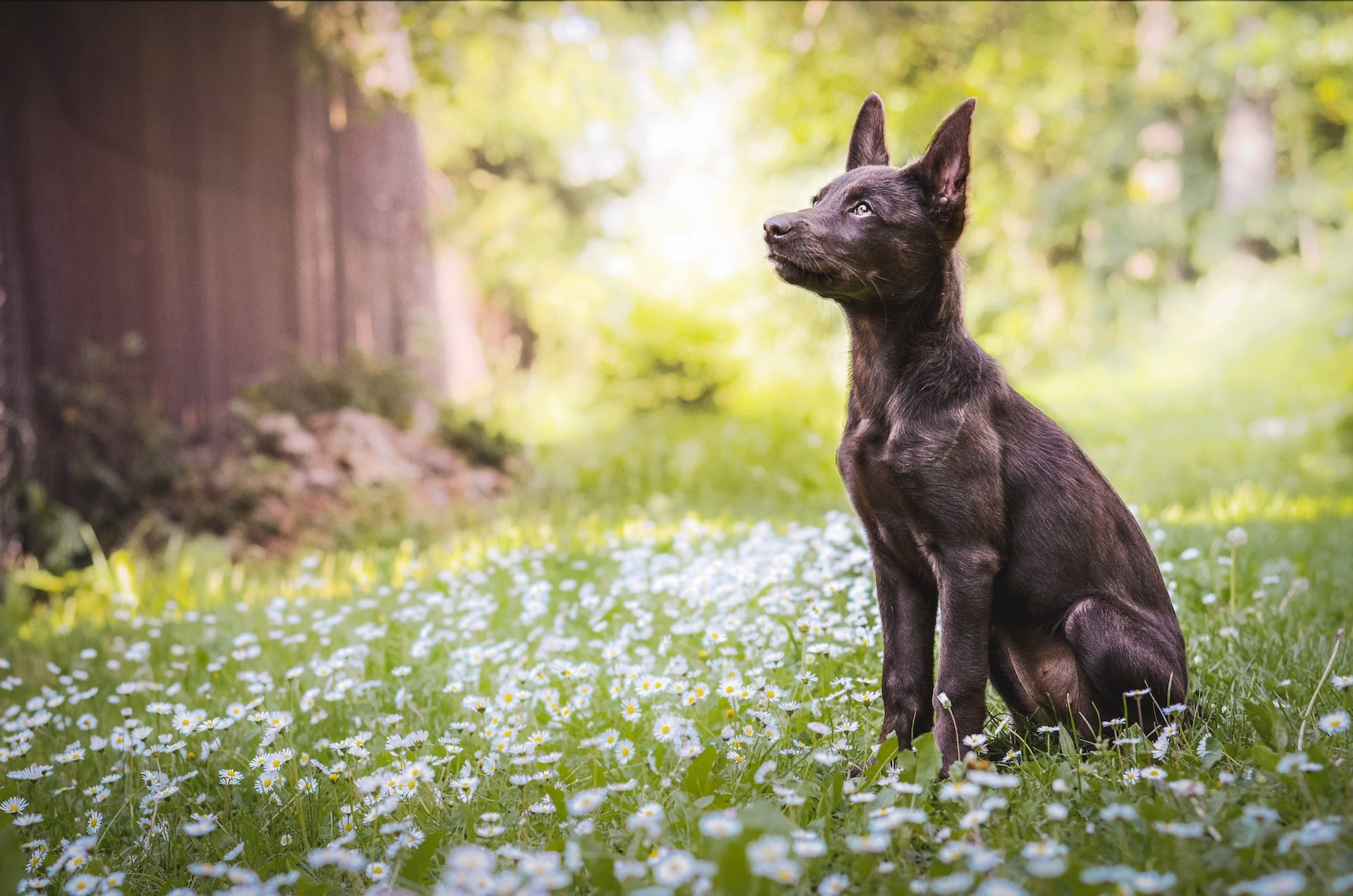
The foundation dogs were “Glasgow” and “Willa”, two black-and-tan collies imported to Australia in the 1870s. Their offspring proved unmatched in heat, endurance, and instinct—perfect for managing flocks across thousands of acres of arid land.
Today, there are two main types:
- Working Kelpie: Unregistered or registered with working dog associations; bred solely for performance
- Show Kelpie: Recognized by kennel clubs (AKC since 2020); slightly stockier, with more coat variety
Key fact: Over 100,000 working Kelpies are estimated to be active on Australian farms today—far outnumbering show lines.
Physical Characteristics
The Kelpie is a medium-sized, athletic, and streamlined dog built for speed and endurance in hot climates.
- Height:
- Males: 19–23 inches (48–58 cm)
- Females: 18–22 inches (46–56 cm)
- Weight:
- Males: 31–46 lbs (14–21 kg)
- Females: 26–42 lbs (12–19 kg)
- Coat: Two varieties—
- Short: Smooth, dense, and weather-resistant
- Long: Medium-length with feathering on tail and legs (less common)
- Colors:
- Black, red, chocolate, fawn, blue, smoke, cream
- May have tan points or white markings (chest, toes)
- Build: Lean, muscular, deep chest, tucked abdomen, and level topline
- Eyes: Almond-shaped, dark brown—alert and intelligent
- Tail: Long, low-set, carried with a slight curve when alert
Its movement is effortless, ground-covering, and tireless—ideal for all-day herding in heat.
Comparison: More heat-tolerant and independent than the Border Collie, and less stocky than the Australian Cattle Dog.
Temperament & Personality
The Kelpie is intelligent, driven, and self-reliant—a true thinking herder.
- Work Ethic: Needs a job—herding, agility, scent work, or advanced obedience
- Independence: Bred to work without commands—makes decisions autonomously
- Loyalty: Bonds deeply with family but may be reserved with strangers
- Energy Level: Extremely high—requires both physical and mental exertion daily
- Trainability: Learns quickly but not eager to please—respects calm, consistent leadership
- Prey Drive: High—may chase small animals if not contained
Myth debunked: Kelpies are not “hyperactive”—they’re purpose-driven. Without a job, their energy turns destructive.
Compared to the Border Collie, the Kelpie is more independent and less handler-focused; compared to the Australian Shepherd, it’s more heat-adapted and less people-oriented.
Care Requirements
Exercise
Needs 90–120 minutes of vigorous daily exercise, including:
- Running, hiking, biking, or off-leash play in secure areas
- Mental work: Herding trials, agility, flyball, puzzle toys
- Never satisfied with walks alone—must have a “job”
Without sufficient outlet, may develop digging, fence-jumping, or obsessive pacing.
Grooming
- Low to moderate shedding—brush 1–2 times weekly
- Bathe only as needed (2–4 times/year)
- Trim nails regularly; clean ears weekly
Note: The short coat is easy to maintain and ideal for hot climates.
Diet
High-quality, moderate-protein diet with joint support. Monitor calories—lean build hides fat easily. Some are prone to food sensitivities.

Environment
Best in rural or suburban homes with secure fencing. Thrives in hot, dry climates—one of the most heat-tolerant breeds. Not ideal for apartments unless heavily exercised.
Health & Lifespan
Average lifespan: 12–15 years (ANKC, OFA)—robust due to working-line selection.
Condition | Description | Prevalence | Symptoms / Notes |
|---|---|---|---|
Malformed hip joint | Low (OFA: ~8% affected) | Lameness; screen breeding stock | |
Cerebellar Abiotrophy (CA) | Neurological degeneration | Rare but serious | Loss of coordination; DNA test available |
Cryptorchidism | Undescended testicles | Occasional | Requires neutering; genetic component |
Epilepsy | Seizure disorder | Low | Sudden seizures; manageable with medication |
Reputable breeders test for CA and hips—ask for clearances.
No major eye or heart issues are widespread in ethical lines.
Training & Socialization
The Kelpie is intelligent but independent—it will obey if it respects you.
- Start socialization before 14 weeks: expose to people, sounds, livestock
- Use positive reinforcement with high-value rewards (meat, play)
- Focus on recall, impulse control, and off-leash reliability
- Never use punishment—this breed becomes defiant or shuts down
Warning: An under-stimulated Kelpie can become destructive or escape-prone—not aggressive, but unmanageable.
Suitability: Ideal Owner Profile
The Kelpie thrives with:
- Experienced working-dog owners
- Active households that provide daily mental and physical challenges
- Farms, ranches, or sport competitors
- Owners who value independence, endurance, and resilience
Not recommended for:
- First-time dog owners
- Sedentary or frequently absent households
- Homes seeking a “casual” or low-maintenance pet
- Anyone unprepared for high drive and heat tolerance
Perfect for: Ranchers, endurance athletes, or active singles wanting a tough, intelligent partner.
Costs & Commitment
- Adoption: Rare outside Australia; available via working-dog rescues ($300–$700)
- Reputable breeder: $1,500–$2,500 (health-tested, ANKC or AKC lines)
- Monthly expenses: $60–$100 (food, grooming, preventatives)
- Special costs: Fencing, herding lessons, professional training
Lifetime cost estimate: $15,000–$22,000 over 13 years
Ethical Adoption vs. Breeder Guidance
Choose breeders who:
- Perform DNA tests for Cerebellar Abiotrophy
- Provide OFA hip clearances
- Raise puppies with early exposure to livestock or outdoor work
- Belong to Dogs Australia or Kelpie Club of America
Avoid breeders selling “mini” or “pet-only” Kelpies without working heritage—this breed’s essence is function, not form.

FAQs
1. Is the Kelpie a medium dog?
Yes—the Kelpie is a medium-sized breed, typically 18–23 inches tall and 26–46 lbs.
2. Are Kelpies good with kids?
With older, respectful children—yes. May try to herd running kids.
3. Do Kelpies shed a lot?
Minimally to moderately—easy to groom with weekly brushing.
4. Kelpie vs. Border Collie: what’s the difference?
Kelpie is more independent, heat-tolerant, and self-reliant; Border Collie is more handler-focused and intense.
5. How rare is the Kelpie?
Common in Australia; rare in the U.S. (fewer than 500 AKC registrations annually).
6. Are Kelpies hypoallergenic?
No—but they shed lightly and produce minimal odor.
7. Can Kelpies live in hot climates?
Yes—they’re among the most heat-tolerant breeds, bred for the Australian outback.
8. What happens if a Kelpie gets bored?
May become escape-prone, destructive, or obsessive—needs constant purpose.
Final Verdict: Is the Kelpie Right for You?
Yes, if…
- You want a medium, resilient, intelligent working partner
- You can provide daily physical and mental challenges
- You value independence, endurance, and loyalty
- You’re prepared for high drive and lifelong engagement
No, if…
- You seek a relaxed, low-energy, or casual pet
- You’re a first-time owner unprepared for strong will
- You can’t commit to daily work and exercise
- You dislike dogs that “think for themselves”
The Kelpie isn’t just a dog—it’s a force of nature, offering unwavering dedication and outback grit to those who earn its respect.
Want to learn more?
Click here to explore how Kelpies are being deployed in conservation efforts to protect endangered wildlife across Australia.